
Updated July 2026 · A NORDVOX guide to recycling bins in Malaysia, current regulations, and how to choose the right bin for your space.
Contents
- The current state of recycling in Malaysia
- Malaysia’s recycling regulations, explained
- What is a recycling bin?
- Types of recycling bins
- Malaysian colour coding — the real story
- The seven recyclable waste categories
- Food waste — the 44.5% problem
- Choosing the right recycling bin for your space
- Recycling bins and EPR compliance
- Buildings across Malaysia that specify NORDVOX
- Frequently asked questions
The Current State of Recycling in Malaysia
Malaysia’s recycling rate stood at 33.17% in 2023 — a meaningful improvement from 15.7% in 2015, but still short of the 40% target set for 2025. Above all, RM291 million worth of recyclable material was lost to landfill in 2023 alone, according to national waste management data. Therefore, closing that gap is no longer only an environmental question. It is an economic one.
Meanwhile, food delivery, e-commerce, and packaged consumer goods have expanded faster than the infrastructure to handle their waste streams. Consequently, well-designed recycling infrastructure — starting with the right bin, in the right place — matters more today than at any previous point in Malaysia’s history.
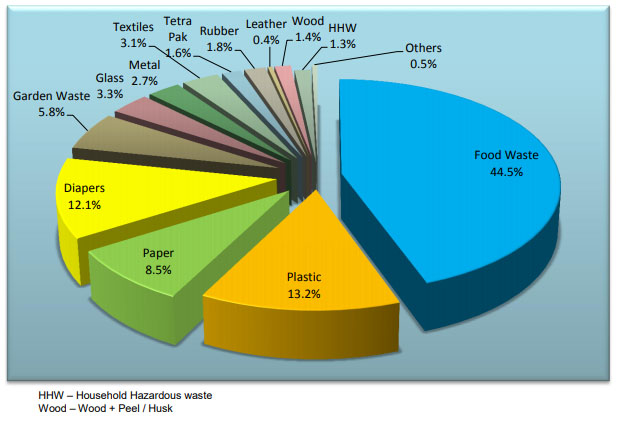
Waste Composition Chart (Source: KPKT)
Malaysia’s Recycling Regulations, Explained
Recycling in Malaysia is governed by the Solid Waste and Public Cleansing Management Act 2007 (Act 672), administered by the Solid Waste and Public Cleansing Management Corporation (SWCorp) and the National Solid Waste Management Department (JPSPN).
Under Act 672, mandatory household waste segregation came into effect in 2015 across eight states and federal territories — including Kuala Lumpur, Putrajaya, Johor, Melaka, Negeri Sembilan, Pahang, Perlis, and Kedah. As a result, homes and commercial premises in these jurisdictions are legally required to separate recyclables from general waste at source.
The regulatory landscape has continued to tighten. Malaysia’s Circular Economy Blueprint for Solid Waste (2025-2035) commits the country to substantially reducing landfill dependence through waste-to-energy plants and expanded producer responsibility schemes. Furthermore, the 2026 waste management reforms have introduced tougher enforcement, higher fines, and expanded EPR obligations for producers of packaged goods, textiles, and electronics.
For a detailed breakdown of what these reforms mean for businesses, councils, and condominiums, see our companion piece: Malaysia’s 2026 Waste Reforms Have Arrived.
What Is a Recycling Bin?
A recycling bin — tong kitar semula in Malay — is a container designed to receive recyclable materials separately from general waste. Consequently, it enables the material to be recovered and reprocessed rather than sent to landfill.
Recycling bins differ from general waste bins in three important ways. Firstly, they are usually colour-coded or labelled to indicate the specific material stream they accept. Secondly, they often come in multi-compartment configurations that group several recyclable streams together in one unit. Thirdly, their apertures are frequently shaped or sized to accept certain items — round openings for bottles and cans, slot openings for paper — which prevents contamination at the point of disposal.
Every one of these design choices exists for the same reason: to make the correct action the easy action. A well-designed recycling bin does more than hold waste. It shapes behaviour.
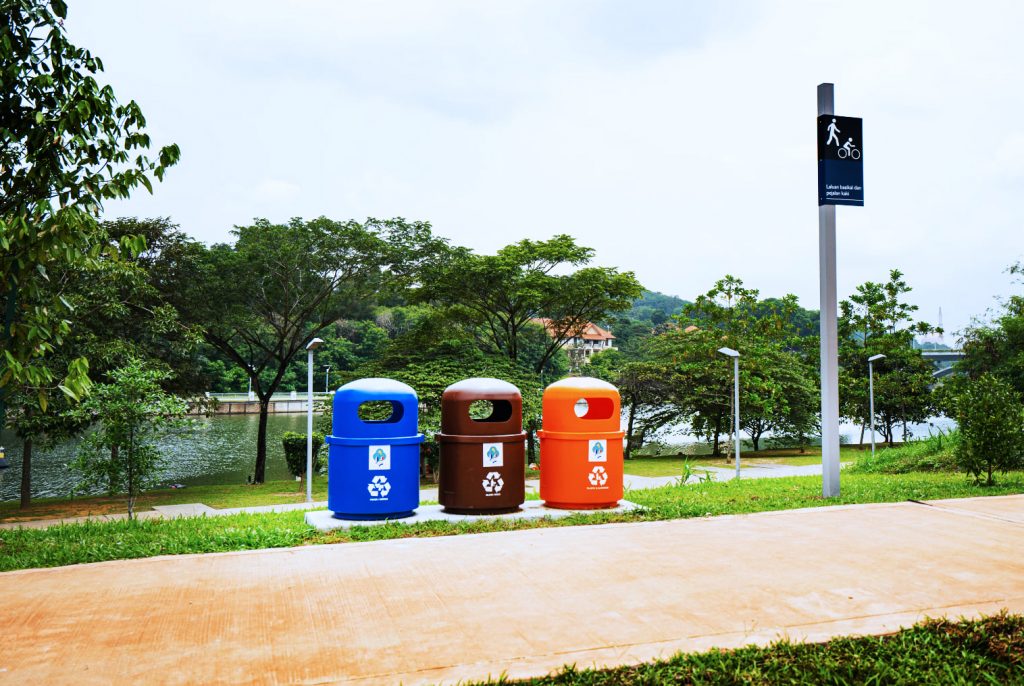
PLB150 recycling bins in the parks of Putrajaya
Types of Recycling Bins
Recycling bins are classified in three ways. Understanding all three helps you specify the right bin for your context.
By Number of Streams
- 2-in-1 recycling bins — two compartments, typically for paper and general waste. Suits small offices, home use, and pantries.
- 3-in-1 recycling bins — the most common configuration in Malaysia. Three streams for paper, plastic/aluminium, and general waste. Suits offices, malls, schools, hotels.
- 4-in-1 recycling bins — four streams, adding glass or food waste. Suits high-traffic public zones and larger commercial premises.
- Single-stream recycling bins — a dedicated bin for one material, used in banks of matching units. Common at MRT stations, universities, and shopping mall food courts.
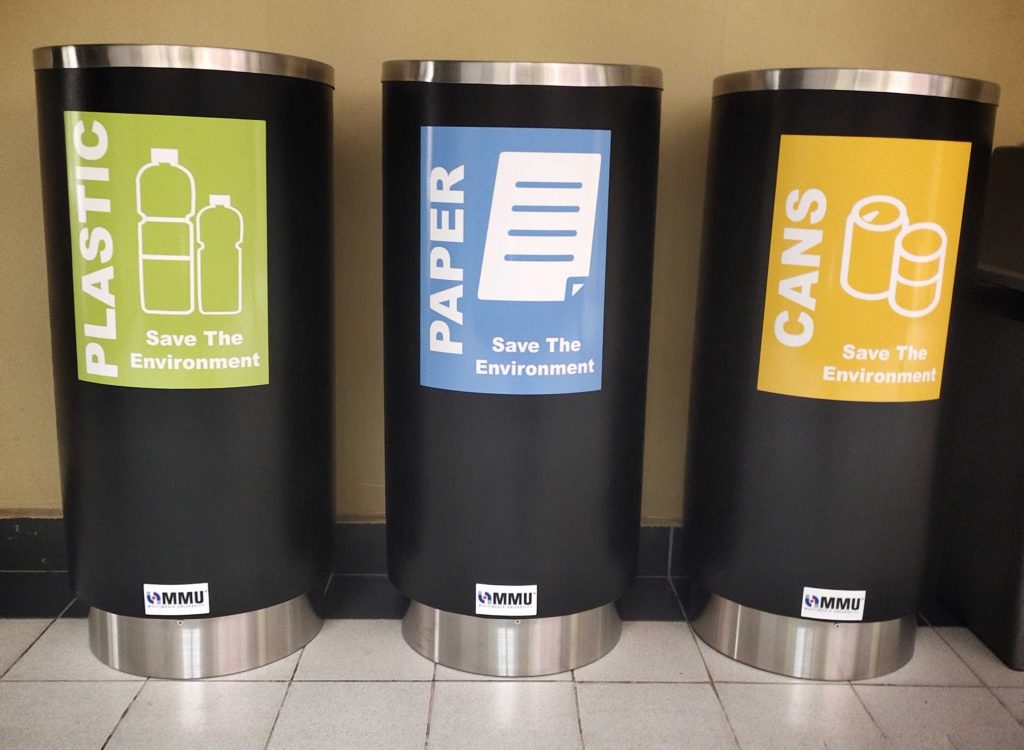
RMP4080 recycling bins at Multimedia University
By Material
- HDPE (High-Density Polyethylene) — the industry standard. UV-stabilised, weather-resistant, lightweight, and 100% recyclable at end of life. Suits indoor and outdoor use.
- Stainless steel — premium finish for hotels, corporate lobbies, and upscale commercial spaces. Long service life; higher cost.
- Fibreglass Reinforced Plastic (FRP) — heavy-duty for high-abuse public zones.
- Powder-coated steel — mid-range durability, often used for outdoor architectural applications.
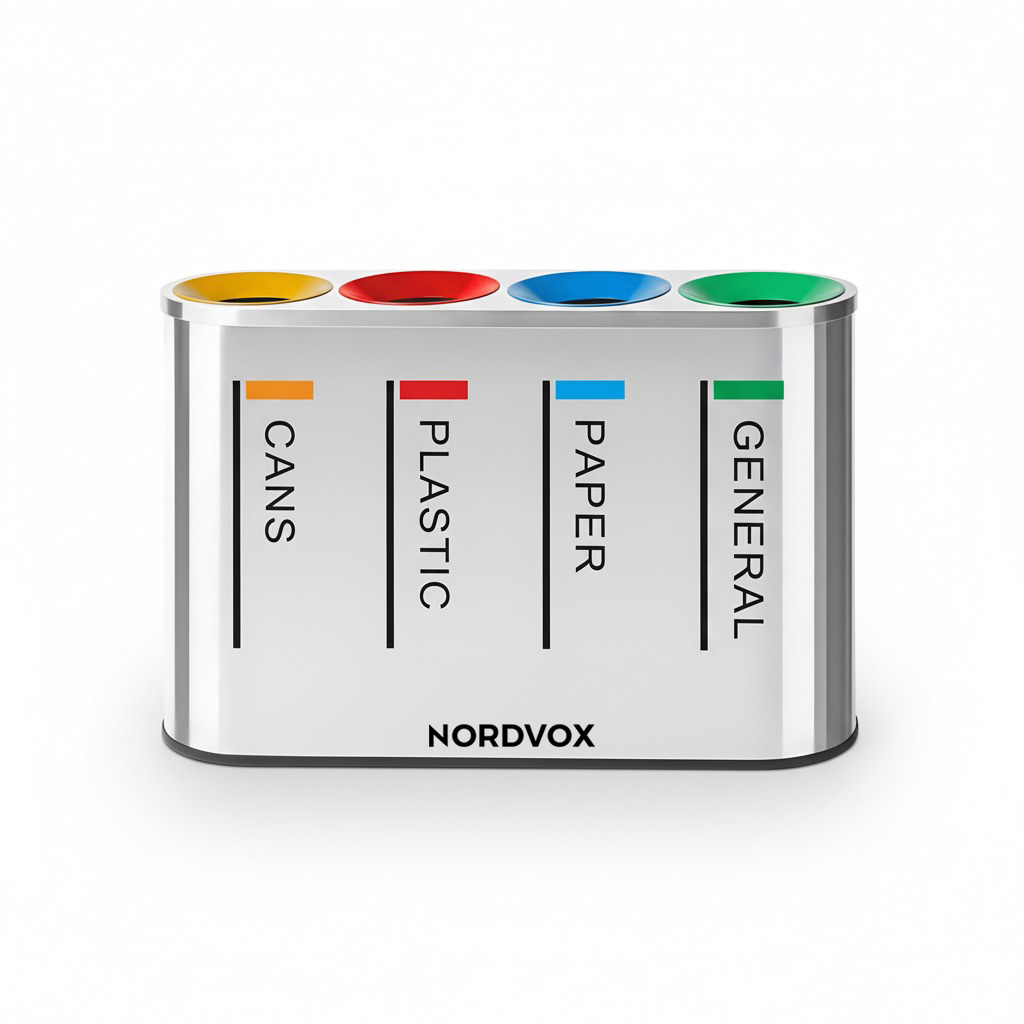
Stainless Steel Recycling Bin with 4 compartments
By Format
- Freestanding bins — floor-mounted units for public spaces, corridors, and open areas.
- Wheel bins (MGB series) — mobile recycling bins in 120L, 240L, 660L, and 1100L capacities. Suits condominiums, factories, and large-volume collection points.
- Wall-mounted recycling stations — space-saving units for offices, cafés, and washroom-adjacent zones.
- Hanging bins — mounted on posts, lamp columns, or bus stops where floor space is limited.
- Cage-style bins — mesh-body units for collecting light, high-volume items like plastic bottles.
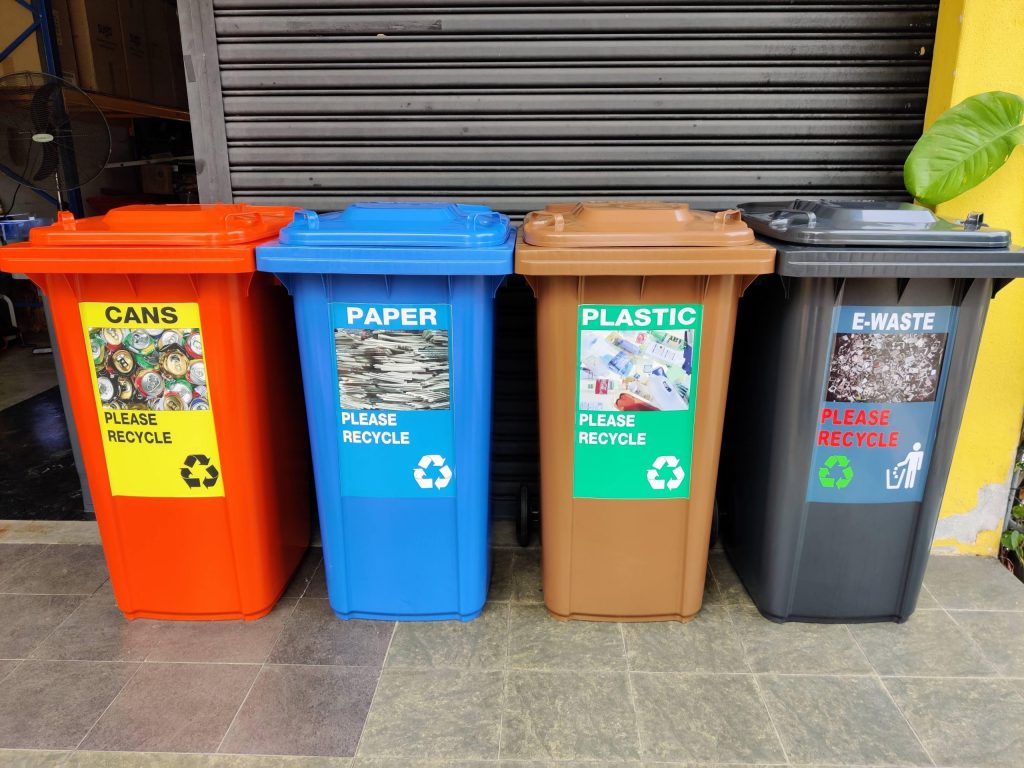
MGB240 recycling bins with various labels and colours
View the full NORDVOX recycling bin range →
Malaysian Colour Coding — The Real Story
Malaysia does not enforce a single national colour standard for recycling bins. However, the Waste Management Association of Malaysia (WMAM) recommends the following:
| Colour | Recommended Stream |
| Blue | Paper |
| Brown | Glass |
| Orange | Plastics and metals |
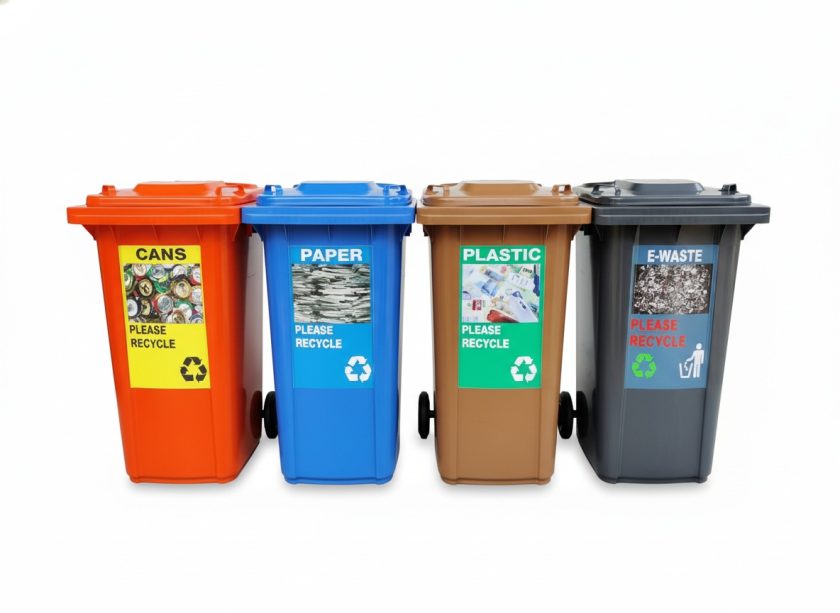
NORDVOX respectfully disagrees with combining plastics and metals in a single stream. In practice, this defeats the purpose of source segregation — plastic and aluminium follow entirely different processing paths, and mixing them at the bin means the material has to be re-sorted downstream. Therefore, we recommend a four-colour or four-compartment system where space allows:
| Colour | Stream |
| Blue | Paper |
| Brown | Glass |
| Yellow | Plastic |
| Grey or Black | Metal (aluminium cans) |
| Green | Food waste (where applicable) |
For sites that must stick to a three-stream setup, we recommend separating plastic on its own and combining paper and metal — this reflects the actual waste composition of most Malaysian offices and F&B outlets, where plastic packaging dominates. Above all, whatever colour scheme you adopt, apply it consistently across every bin in the building. Inconsistent labelling is the single biggest cause of contaminated recycling streams.
The Seven Recyclable Waste Categories
Malaysian recycling streams generally fall into seven categories:
- Plastics — bottles, containers, food packaging, delivery clamshells. The largest recyclable stream in Malaysian commercial premises.
- Paper — office paper, cardboard, newspapers, magazines, packaging. Fully recyclable when clean and dry.
- Metal — aluminium beverage cans, steel food cans, foil.
- Glass — beverage bottles, jars, cosmetic containers.
- Food waste — 44.5% of all household and commercial waste in Malaysia by weight. Best composted or processed via anaerobic digestion rather than landfilled.
- E-waste — batteries, phones, appliances, cables. Requires specialist handling under Malaysian regulation.
- Textiles and clothing — an emerging EPR stream. Increasingly collected through in-store take-back bins at fashion retailers.
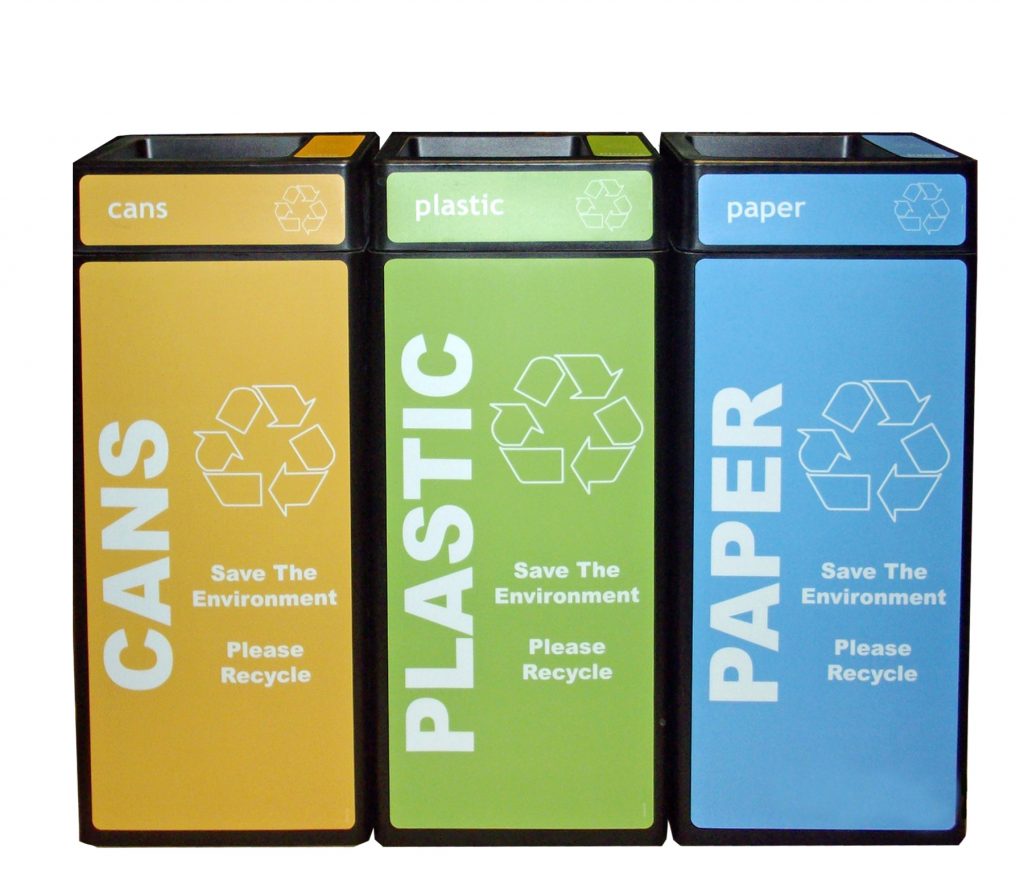
RDP3380 recycling bin set
Food Waste — The 44.5% Problem
Studies by the National Solid Waste Management Department (JPSPN) show that food waste accounts for 44.5% of Malaysia’s total waste stream. As a result, no serious recycling strategy is complete without addressing it. However, food waste receives markedly less attention than plastic or paper — despite being the largest single component of the problem.
The issue is not just landfill volume. When food waste rots in landfill, it releases methane — a greenhouse gas roughly 28 times more potent than carbon dioxide over a century-long horizon. Consequently, reducing landfilled food waste is one of the most effective climate actions any Malaysian building can take.
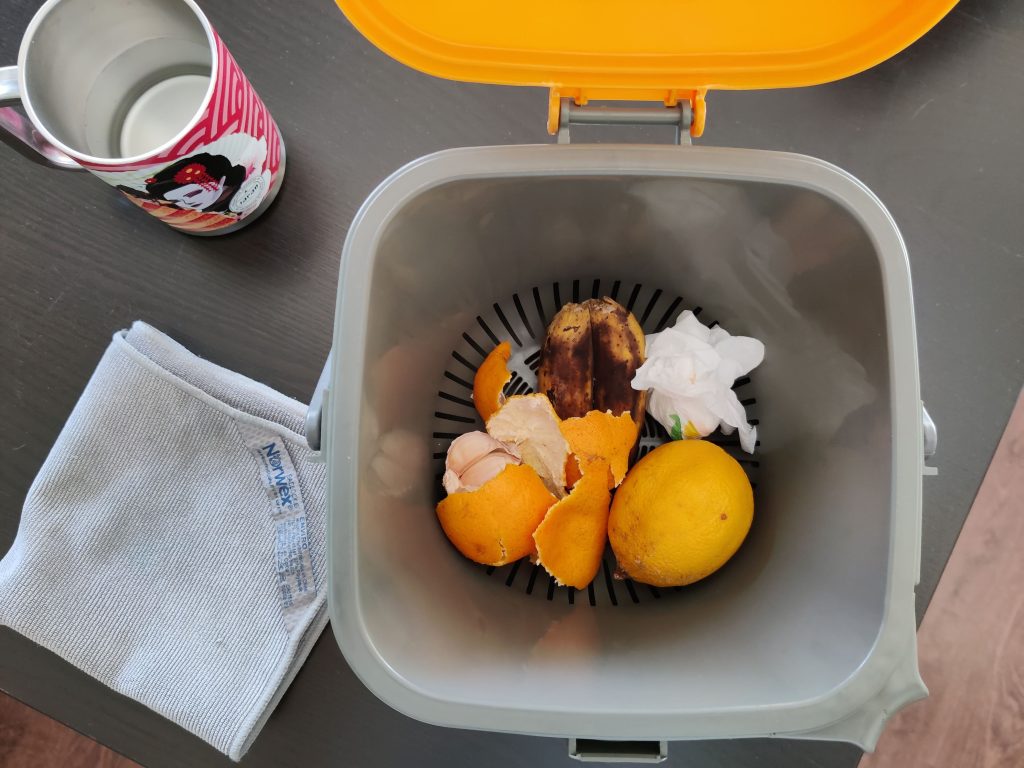
PGB bin series for food waste
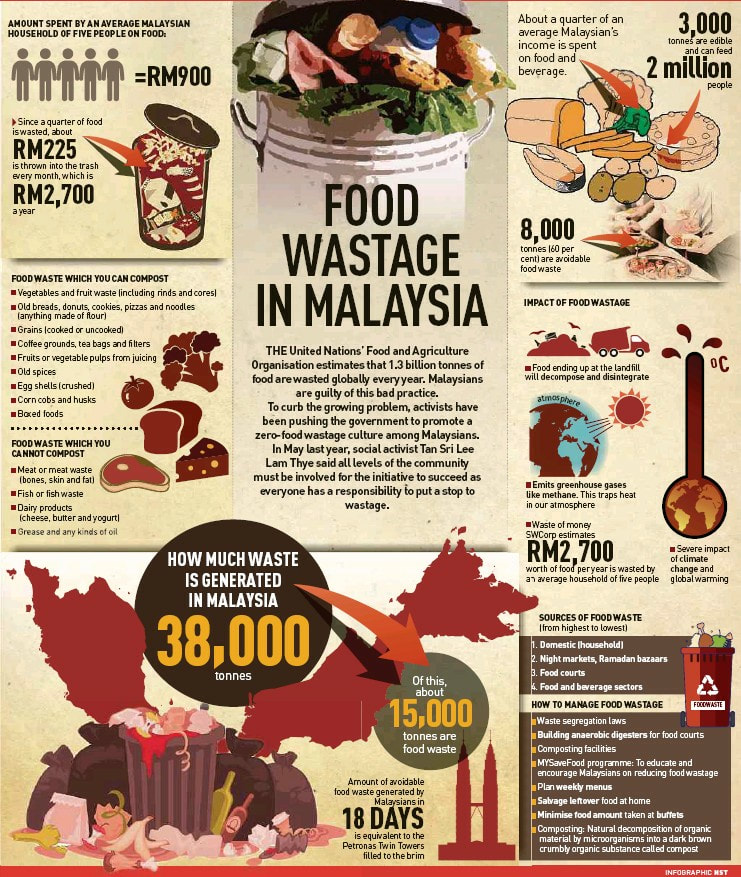
Food Waste in Malaysia. Source: NST
Two solutions work in practice. Firstly, dedicated food waste bins — the NORDVOX food waste range covers 10L to 120L for kitchens, F&B outlets, school canteens, and hospital kitchens. Secondly, on-site composting equipment for larger operations. Our friends at MAEKO produce excellent composting machines that convert food waste directly into fertiliser.
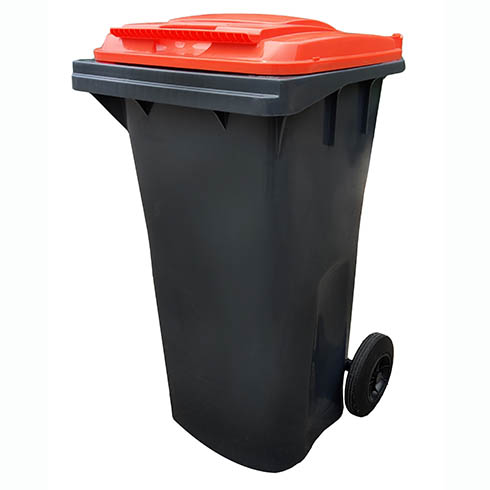
MGB 120 food waste bin
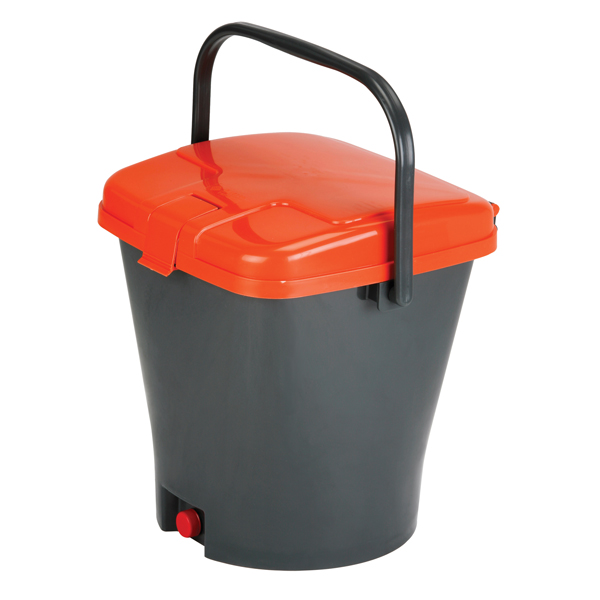
The PGB25 food waste bin
Choosing the Right Recycling Bin for Your Space
The right bin depends on four variables: location, traffic, waste composition, and aesthetic requirements.
For Offices
3-in-1 recycling stations for common areas and pantries. Consider stainless steel or Nordic-designed HDPE for guest-facing zones. Match the colour code across every floor.
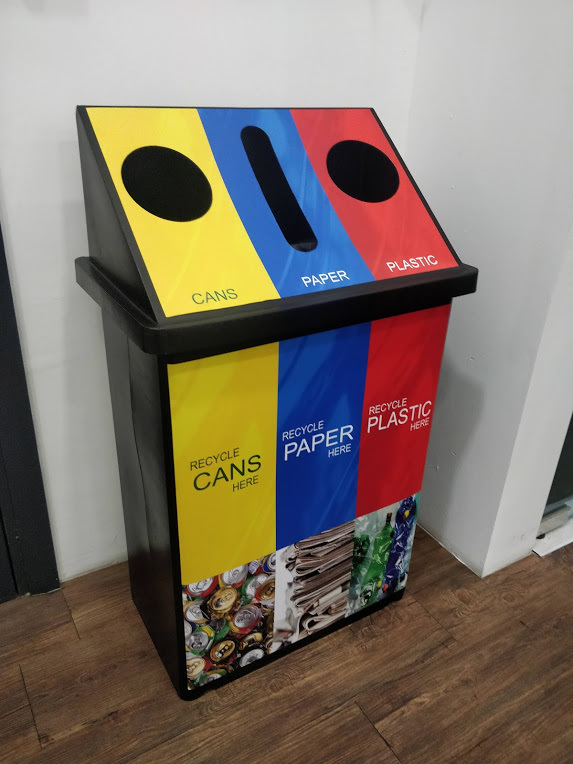
RSB610 for office use
For Shopping Malls
4-in-1 bins for concourses; single-stream bins in banks at food courts. Stainless steel is standard for guest-facing corridors. Coordinate with your mall’s brand palette rather than defaulting to standard colours — custom-branded recycling bins raise engagement and reinforce the mall’s sustainability positioning.
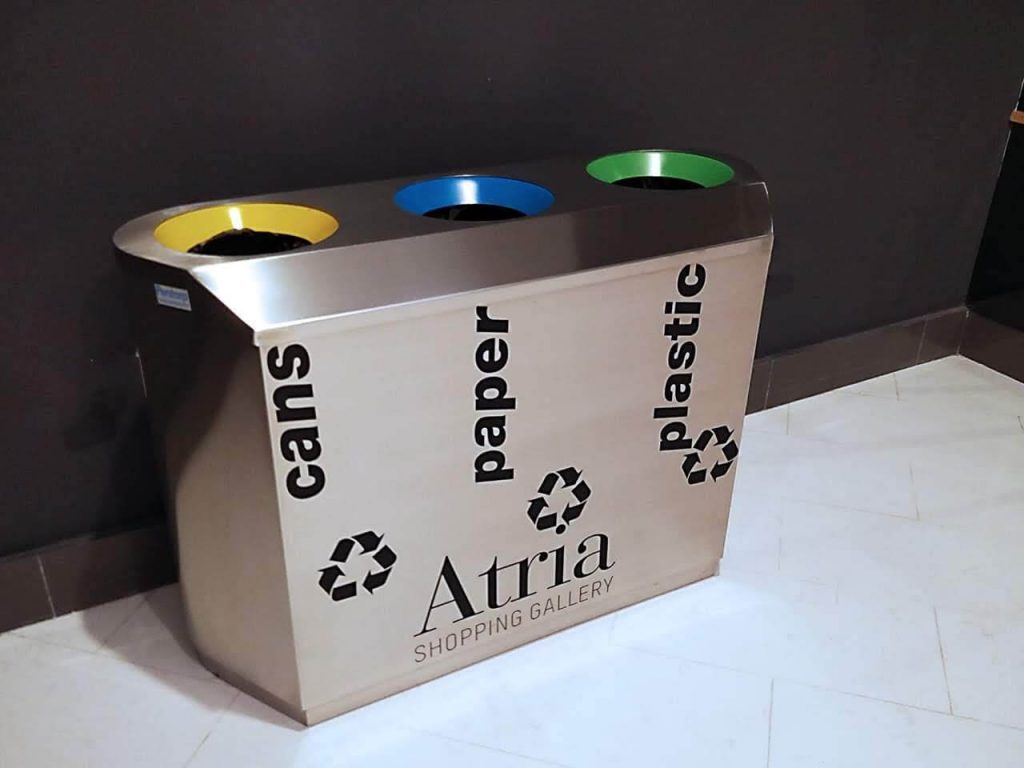
RSS-1303 trio recycling bin at Atria Shopping Gallery
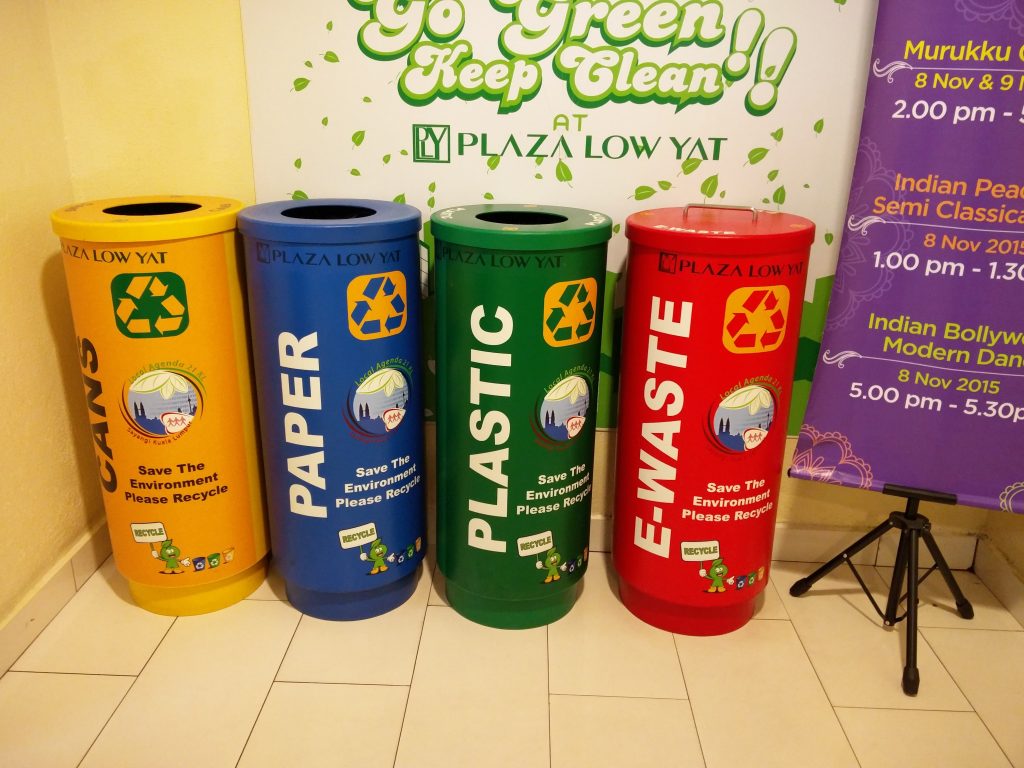
RSB4090 recycling bins in Low Yat Plaza
For Condominiums and High-Rise Residential
Bin-room configuration matters most here. MGB240 and MGB660 recycling sets on wheels handle the volume; hallway units provide floor-level accessibility.
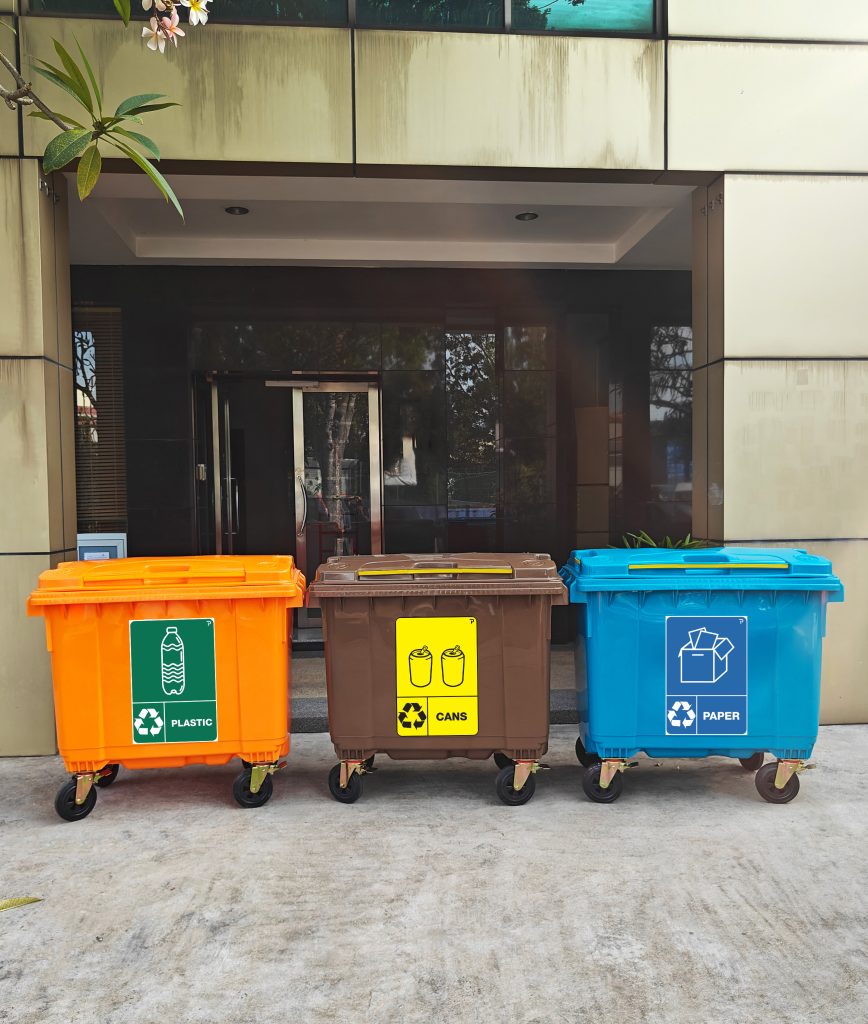
MGB660 recycling set


