
For years, the bins out back were somebody else’s problem — a line in the facilities budget, emptied and forgotten. In 2026 that changed. Under Malaysia’s mandatory sustainability-reporting rules, the waste your organisation produces has become a disclosed, externally assured figure sitting inside your annual report. And if the data behind that figure is messy, so is your report.
This is not a distant, big-corporation problem. The reporting net is widening every year, the numbers must now be independently assured, and waste is one of the streams under the microscope. The organisations getting ahead of it are discovering something useful: the same infrastructure that keeps a site clean is the infrastructure that produces clean data.

What actually changed in 2026
Malaysia’s National Sustainability Reporting Framework (NSRF) adopts the global ISSB standards — IFRS S1 for general sustainability disclosures and IFRS S2 for climate — as the baseline for corporate reporting. It is being phased in: the largest listed companies began with financial years from 2025, listed companies below RM2 billion in market value are drawn in from 1 January 2026, and ACE Market issuers and large non-listed companies follow from 2027.
The critical detail for everyone is this: the framework requires external assurance of sustainability statements, specifically to stamp out greenwashing. In other words, your ESG numbers now have to be independently checked — the same way your financial accounts are. A confident sentence is no longer enough; you need evidence behind it.
Waste sits squarely inside this. Under the GHG Protocol, waste generated in your operations falls within Scope 3 emissions, and landfill diversion is a headline environmental metric. To report it, you have to know how much waste you generate, how much you keep out of landfill, and be able to prove both.
Why this is a bins problem, not a spreadsheet problem
Here is the part most organisations discover too late: you cannot measure — or divert — what you have not separated. If recyclables, food waste and general waste all go into one mixed skip, there is no numerator and no denominator. Your diversion rate is unknowable, and an assurance provider will treat an unverifiable claim as no claim at all.
Clean, auditable waste data is created at one precise moment — when a person decides which bin to use. Get that moment right, at every point where waste is produced, and the data flows naturally. Get it wrong and no amount of spreadsheet work at year-end can reconstruct what was never captured.
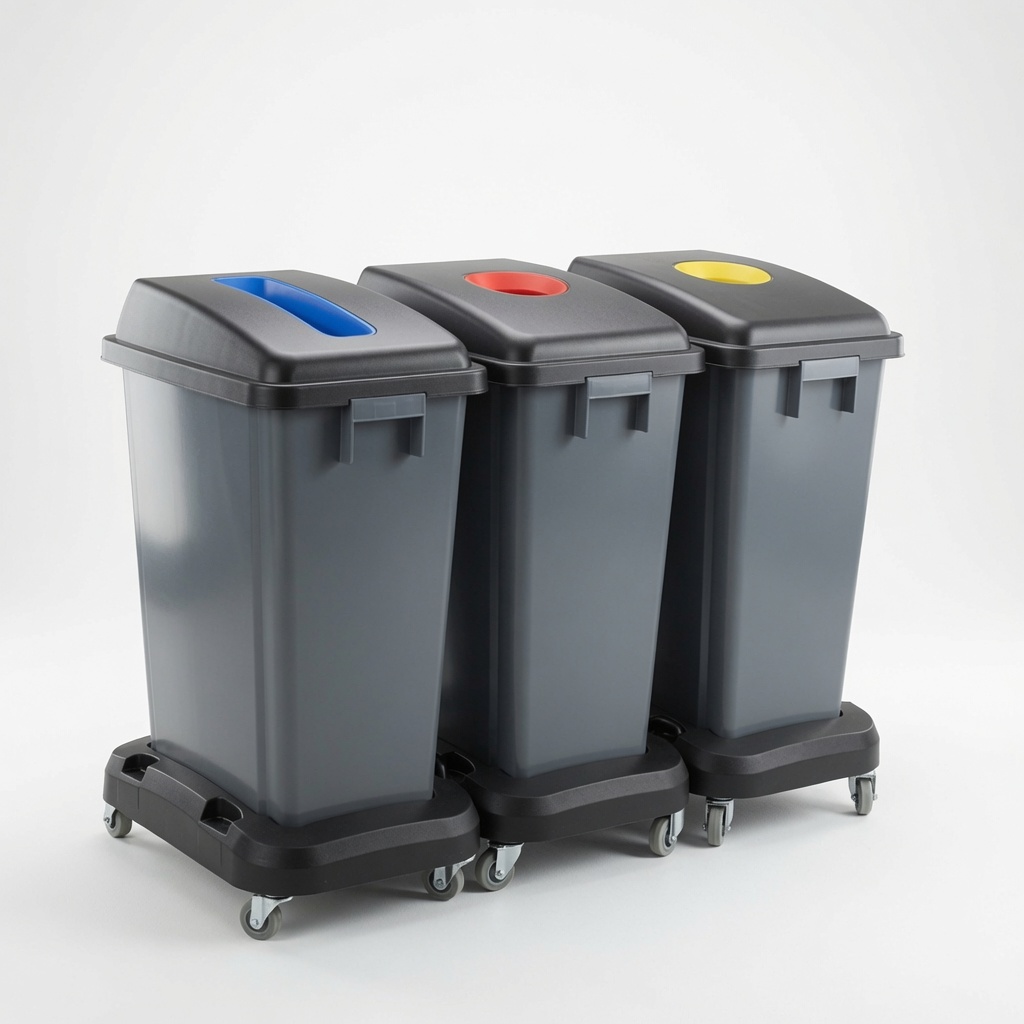
Contamination is the silent killer of a diversion claim. A recycling stream polluted with general waste is often rejected wholesale at the sorting facility — so waste you counted as recycled quietly becomes landfill, and your reported number is wrong. Clear, well-designed, well-labelled bins are the cheapest contamination control you can buy.
The greenwashing trap
Because assurance is now mandatory, vague environmental language has become a liability rather than an asset. “We are committed to sustainability” and “we recycle” are not numbers, and they will not survive scrutiny. What an auditor wants is a system they can follow: segregated streams, measured volumes, and documented collection by licensed operators.
You cannot audit a claim. You can audit a system. The bin is where the system begins.
What good looks like
This is where NORDVOX has spent more than thirty years. As a Malaysian-Swedish family business, we build waste and recycling infrastructure to the Nordic standard — where a bin is not just a container but the first, most important measuring point in your entire waste system. Our range is designed to turn everyday disposal into reliable data:
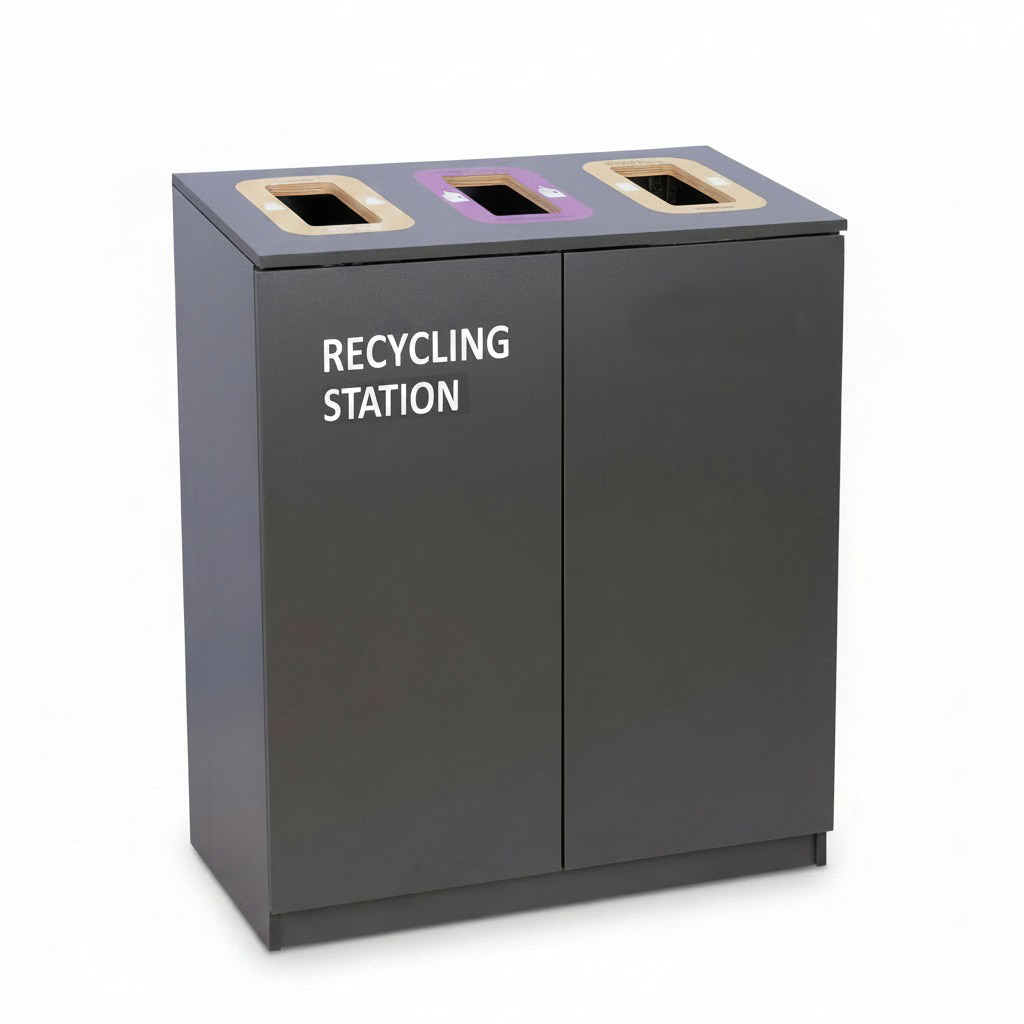
- Multi-stream recycling stations — clearly labelled points that produce clean, countable recyclables in offices, lobbies, campuses and public areas.
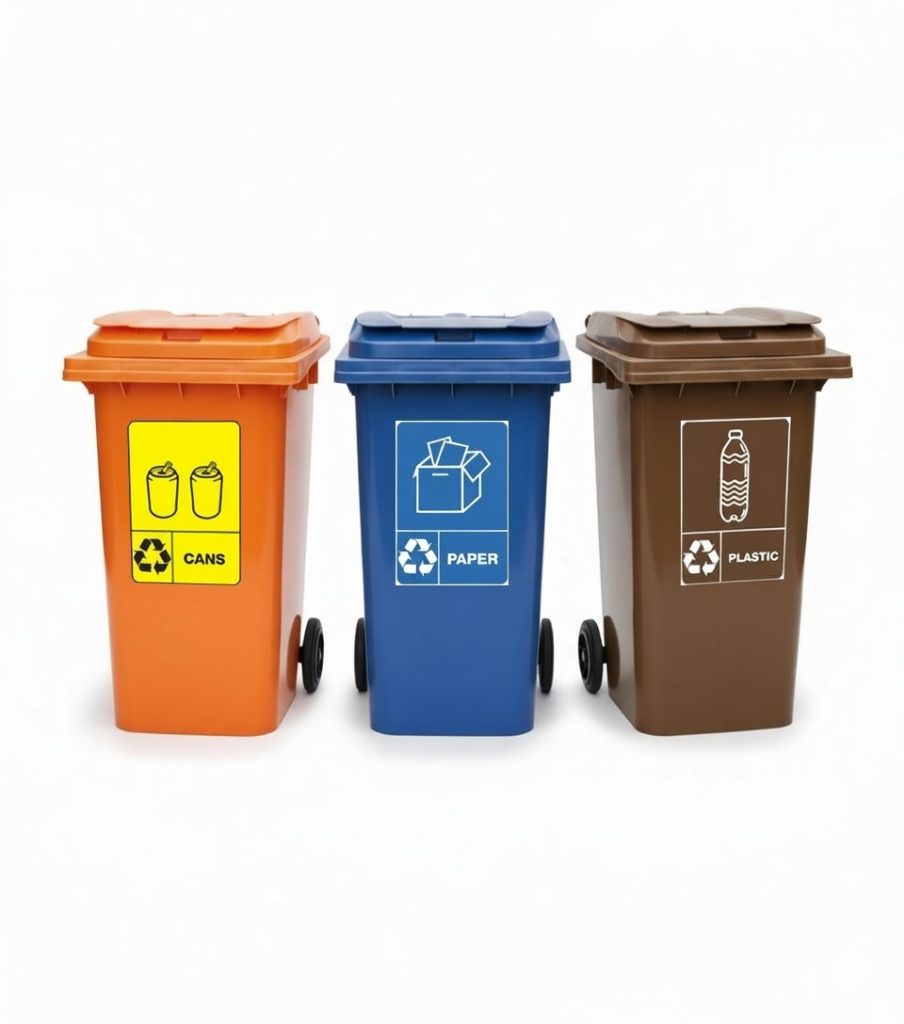
- Colour-coded MGB wheel bins — a container per stream at the bin centre, giving you volume data that feeds straight into your diversion rate.
- Consistent colours and labels across every site — comparability is exactly what an assurance provider rewards, and inconsistency is what they flag.
- EN 840, UV-stabilised HDPE and stainless steel — built to survive Malaysia’s climate and heavy daily use, so your data-collection points do not crack, fade or fail.
Not sure what your site actually produces?
NORDVOX will help you map your waste streams and specify the right recycling and waste bins for clean, auditable data. Call +603-8926 1301 or WhatsApp +6017-385 6801 for a free waste-stream consultation.
Five steps to make your waste ESG-ready
- Map your streams. Identify what your site actually generates — recyclables (paper, plastic, glass, metal), food and organic waste, residual general waste, and any clinical or hazardous waste.
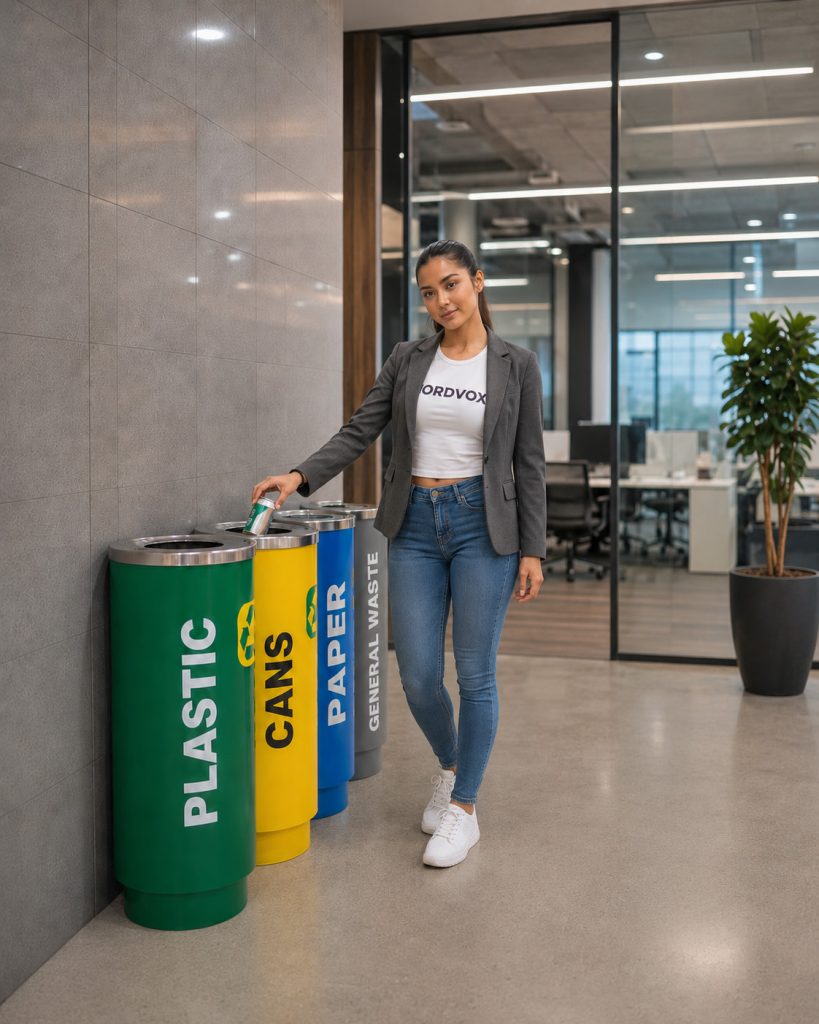
- Deploy segregation infrastructure. Put a clearly labelled bin for each stream everywhere waste is produced — not just at the loading bay, but at every desk cluster, pantry and lobby.
- Standardise colours and labels across all sites. Comparable data across locations is what makes a report credible; ad-hoc, site-by-site schemes are what make it fall apart under assurance.
- Measure and document. Record volumes by stream and keep evidence of collection by licensed operators. The paper trail is the proof behind the number.
- Review and improve. Use the data to raise your diversion rate year on year — the upward trend is the story your ESG report exists to tell.
Turn a compliance headache into a credible story
The organisations that handle this well do not just pass an audit. They can show, with numbers that stand up to scrutiny, that they take their shared spaces and their responsibilities seriously — to investors, to regulators, and to the people who use those spaces every day. A clean, well-run waste system is one of the most visible, tangible pieces of evidence an organisation can point to. It is the difference between claiming you care and proving it.
That is what we mean by the Nordic standard: infrastructure quiet enough to disappear into the background of a well-run building, and precise enough to give you a number you can defend.
Get your bins — and your data — right
Whether you are preparing your first sustainability report, upgrading a single office, or rolling out segregation across a portfolio of buildings, NORDVOX will help you choose and supply the recycling and waste bins that make your data clean from the very first bin — across Peninsular and East Malaysia.
- 📞 Office: +603-8926 1301
- 📱 WhatsApp: +6017-385 6801
- 📧 Email: info@nordvox.com
- 🌐 Website: www.nordvox.com
NORDVOX SDN. BHD.
14 Jalan 9/7, Seksyen 9, 43650 Bandar Baru Bangi, Selangor, Malaysia.
Recycling Bins & Stations | MGB Wheel Bins | All Waste Bins | Request a Quote | Download Catalogue
Request a free waste-stream consultation and quote
Tell us about your site and we will recommend the right recycling stations and wheel bins, with volume pricing for multi-site rollouts. 📞 +603-8926 1301 · 📱 WhatsApp +6017-385 6801 · 📧 info@nordvox.com
Sources: Securities Commission Malaysia (National Sustainability Reporting Framework) · Bursa Malaysia · IFRS S1 & S2 / ISSB · GHG Protocol (Scope 3). Reporting thresholds, phase-in dates and any grant programmes are indicative and change; confirm current requirements with the Securities Commission, Bursa Malaysia or your assurance provider before relying on them.


