
KUALA LUMPUR — NORDVOX Editorial · Updated June 2026 · 6 min read
For decades, separating waste in Malaysia was a polite suggestion. In 2026, it became the rules of doing business. New producer-responsibility laws, tougher enforcement and steep penalties have quietly turned the humble bin into a compliance instrument — and most organizations are not ready.
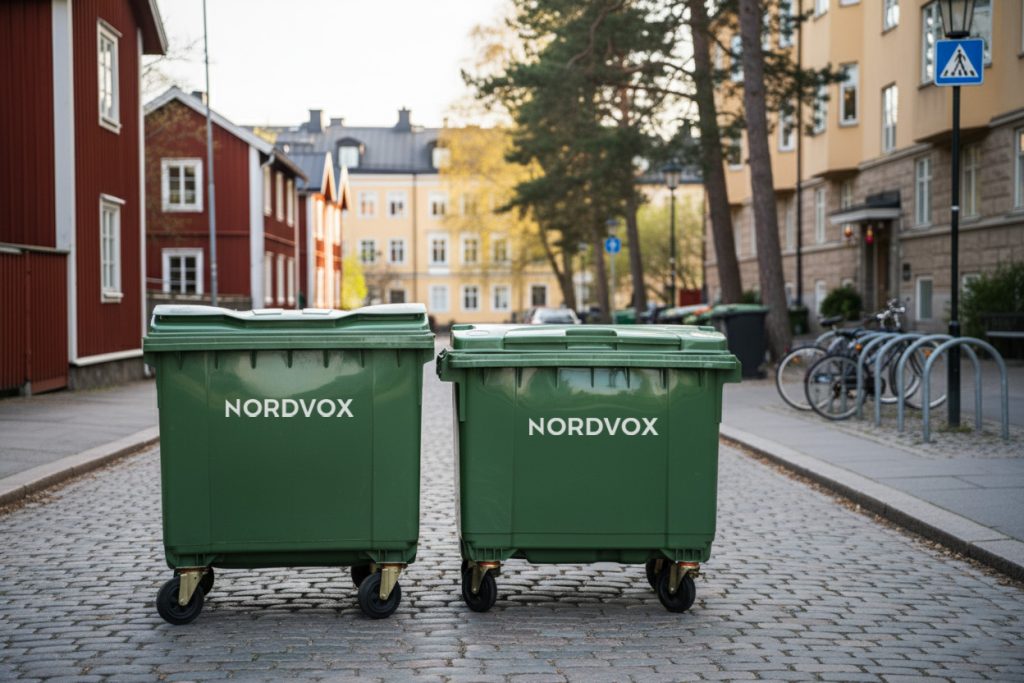
Malaysia generates roughly 38,000 tonnes of solid waste every single day, and the great majority of it still ends up in landfill. For a country that has spent years writing ambitious sustainability roadmaps, that gap between intention and reality is exactly what the 2026 reforms are designed to close — and they do it by shifting the cost, and the legal responsibility, onto the organisations that create and handle the waste.
If you run a factory, manage a condominium, sit on a joint management body, operate a hotel or hospital, or hold a council waste contract, three things changed around you. Here is what they are, in plain language — and why your waste infrastructure is suddenly a board-level concern.
1. Extended Producer Responsibility (EPR) has begun
This is the headline shift. Under Malaysia’s Plastics Sustainability Roadmap and the Circular Economy Blueprint for Solid Waste (2025–2035), Extended Producer Responsibility for packaging starts rolling out in 2026. The principle is simple but far-reaching: the companies that put packaging onto the market become financially responsible for collecting and recycling it at the end of its life.
The first phase begins on a voluntary footing in 2026 and is set to become mandatory by 2030, covering six material streams — plastic, paper, glass, aluminium, metal and others. For producers and retailers, that means recycled-content targets, collection obligations and, crucially, the need to demonstrate that recyclable material is actually being captured and sorted rather than buried. None of that works without separation at source.
2. Source separation is no longer optional — and it is being enforced
Separating recyclables from general waste has been law for years in the states where the Solid Waste and Public Cleansing Management Act (Act 672) applies, with parallel rules set by local councils elsewhere. What is new is the appetite to enforce it. Inspectors increasingly check bin composition before collection, and non-compliance carries fines. The era of a single mixed skip behind the building is ending.
For commercial, industrial and institutional premises, the expectation is now explicit: recyclables, food waste and residual waste kept apart, in clearly designated containers, consistently, across every site you operate.
3. The penalties — and the reporting — got serious
The Environmental Quality (Amendment) Act 2024, in force since July 2024, raised the ceiling on environmental penalties dramatically, to as much as RM10 million, and made company directors personally liable for breaches. Separately, Bursa Malaysia’s sustainability-reporting framework now expects listed companies to disclose waste data as part of their environmental performance, and a national carbon tax — proposed in Budget 2025 at roughly RM35–45 per tonne — is slated to begin in 2026, starting with heavy industry.
Waste management in Malaysia has moved from a cost line to be minimised to a compliance function to be managed. The organisations that treat it that way will spend less, report cleaner and sleep better.
What this actually means on the ground
Strip away the acronyms and every one of these changes points to the same operational reality: you must be able to separate, contain and present different waste streams — reliably, visibly, and at the scale your site produces. That is not a software problem or a policy memo. It is a physical one. And it starts at the bin.
For businesses and offices
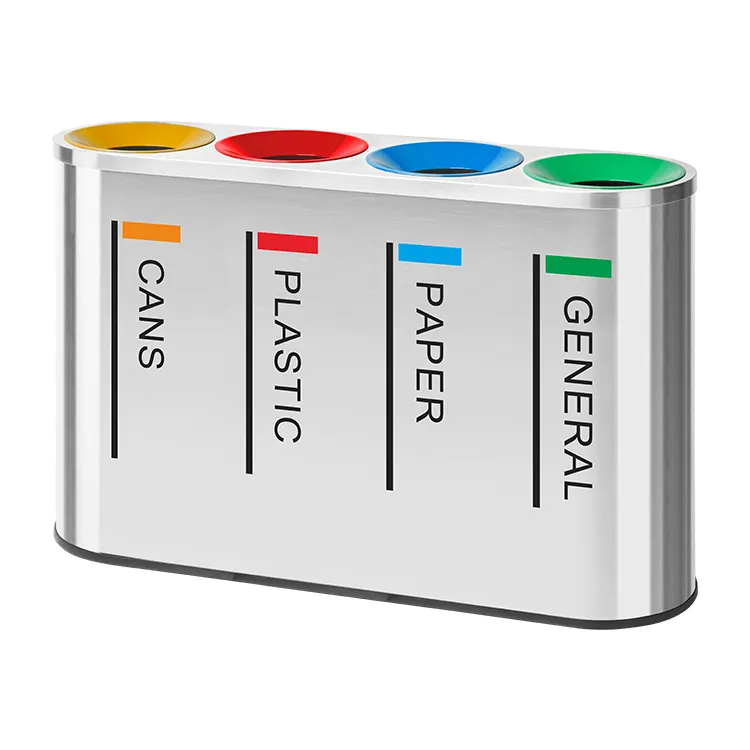
You need front-of-house recycling points that staff and visitors actually use, plus back-of-house capacity that your collector can service. A confusing or overflowing station does not just look bad — it produces contaminated, unrecyclable waste that fails an inspection and an ESG audit alike.
For condominiums, JMBs and property managers
High-rise bin centres are where compliance is won or lost. Residents will separate waste only if the system makes it effortless and the bins are robust enough to survive daily tropical use. Colour-coded wheel bins at the chute and dedicated recycling containers in common areas are the practical answer.
For local councils and waste contractors
Municipal fleets need bins that match their trucks — whether modern MGB lifters or older manual-tip and chain-lift systems. Capacity, durability and council-specification compliance decide whether a collection round runs smoothly or grinds to a halt.
The unglamorous truth: compliance starts at the bin
You cannot separate waste you have nowhere to put. The single biggest reason source-separation programmes fail is not a lack of goodwill — it is a lack of well-designed, clearly labelled, durable infrastructure in the right places. Get the bins right and the behaviour follows. Get them wrong and no amount of signage will save the programme.
Four things separate a recycling system that works from one that gathers dust:
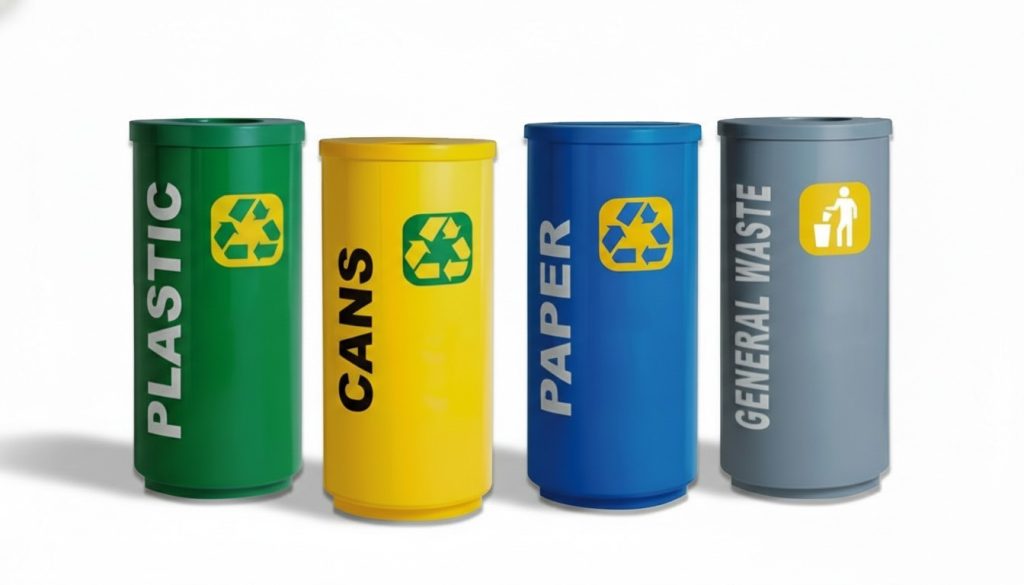
- Clear visual coding. Distinct colours and labels for each stream remove the guesswork — the moment someone has to think, contamination begins.
- Right capacity, right place. Under-sized bins overflow and over-sized ones waste space. Match the container to the waste volume and foot traffic of each location.
- Real durability. Malaysia’s heat, humidity and UV destroy cheap plastic. Bins that crack or fade within a year are a false economy and a recurring expense.
- Collection compatibility. The bin has to fit the truck and the council’s system, or it simply will not be emptied.
What good looks like
This is the standard NORDVOX has built its business on since 1993. A Malaysian-Swedish family company, we brought Nordic waste-handling design — where function and durability are never traded against each other — to Southeast Asia, and we have spent more than thirty years supplying the organisations that keep Malaysian cities running, including Alam Flora, Cenviro, E-Idaman and councils across the country.
Our range is built precisely for the situations the 2026 reforms create:
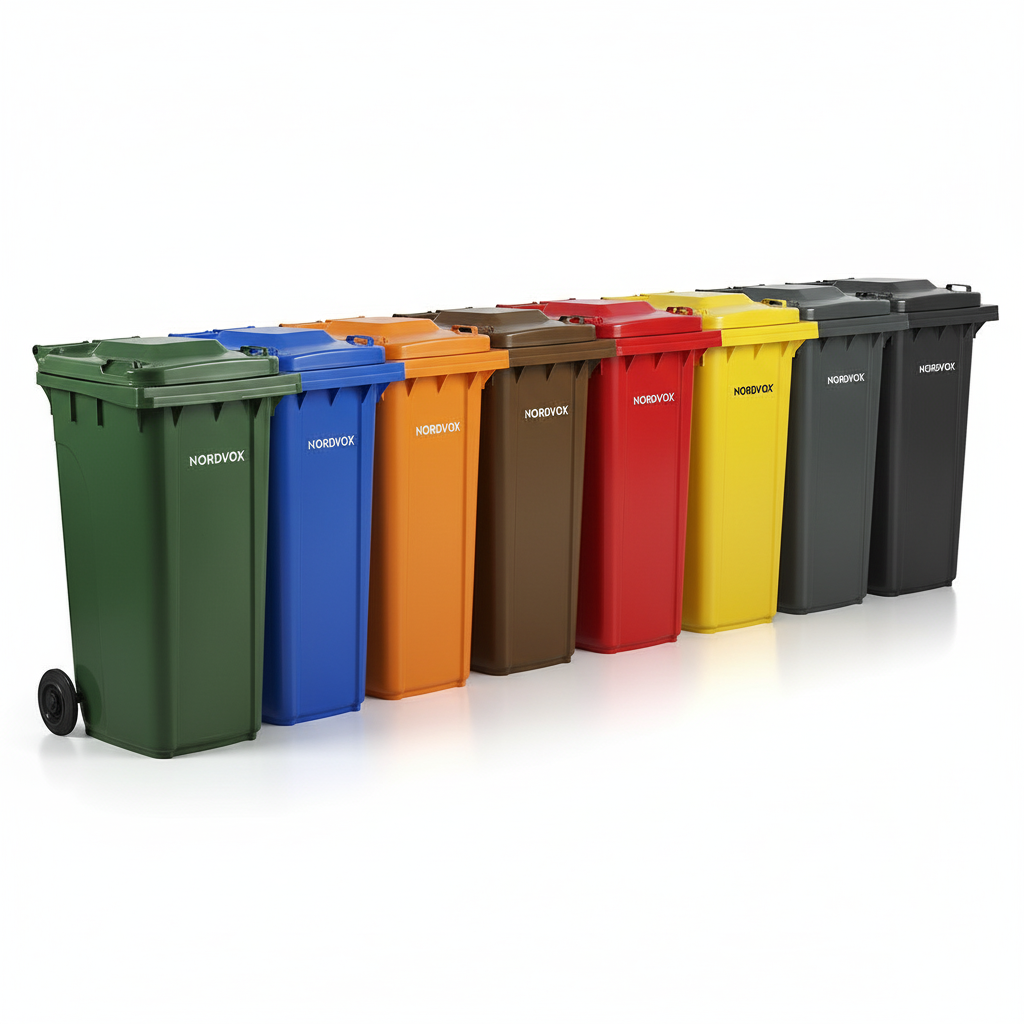
- MGB wheel bins in twelve sizes (MGB120–MGB1100), UV-stabilised HDPE, available in the full range of segregation colours and built to European EN 840 standards.
- Multi-stream recycling stations for offices, lobbies, campuses and public areas — labelled, intuitive, and designed to be used correctly without thinking.
- Four-wheel and leach bins for high-volume bin centres, industrial sites and council collection points, in HDPE or full galvanised steel.
- Stainless steel and pedal bins for front-of-house environments where the bin should be felt, not seen.
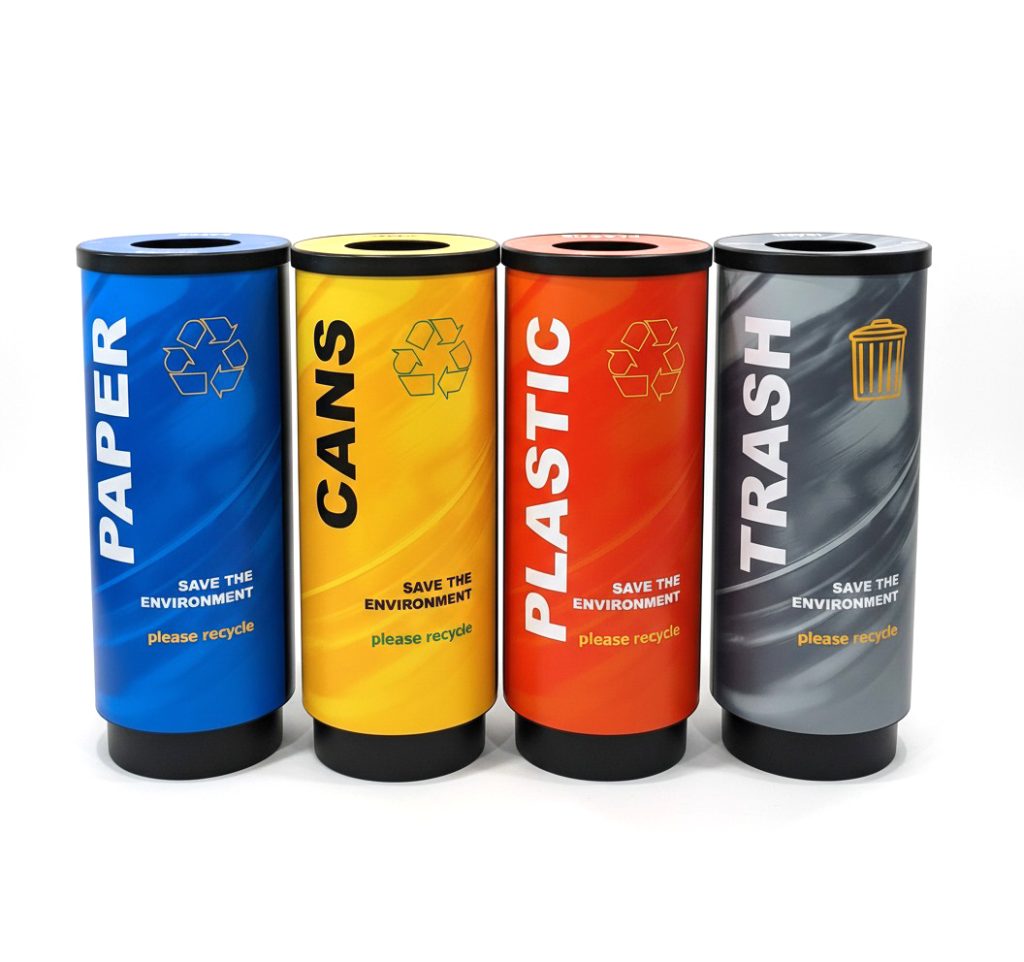
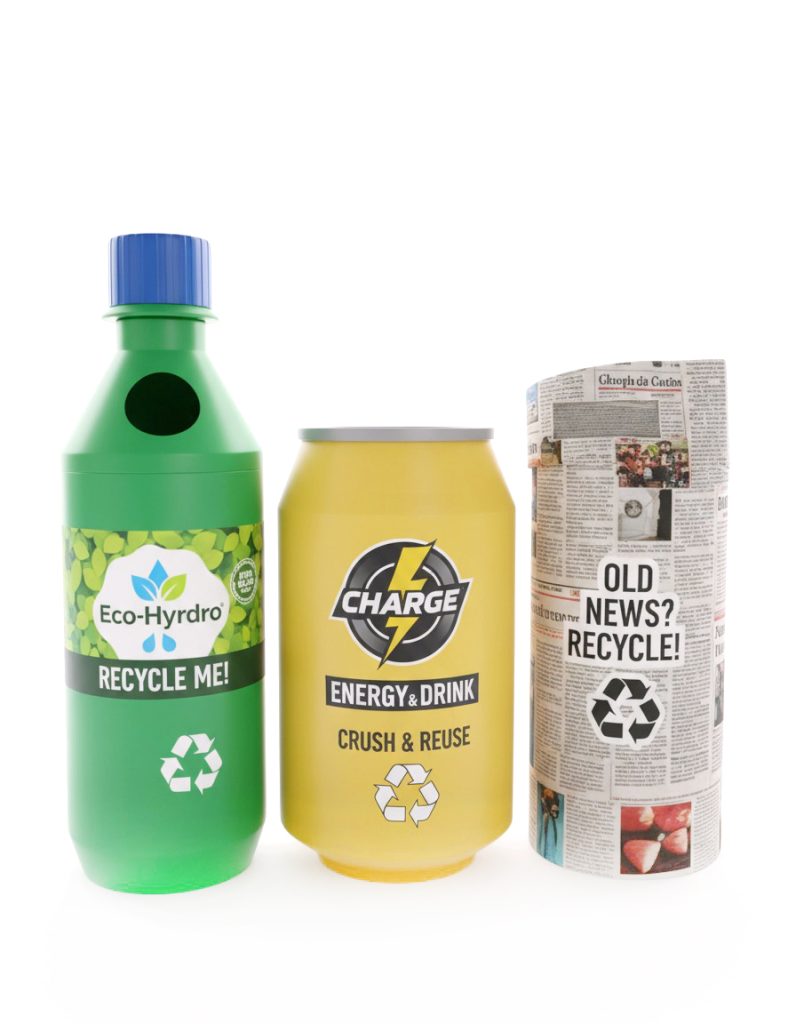
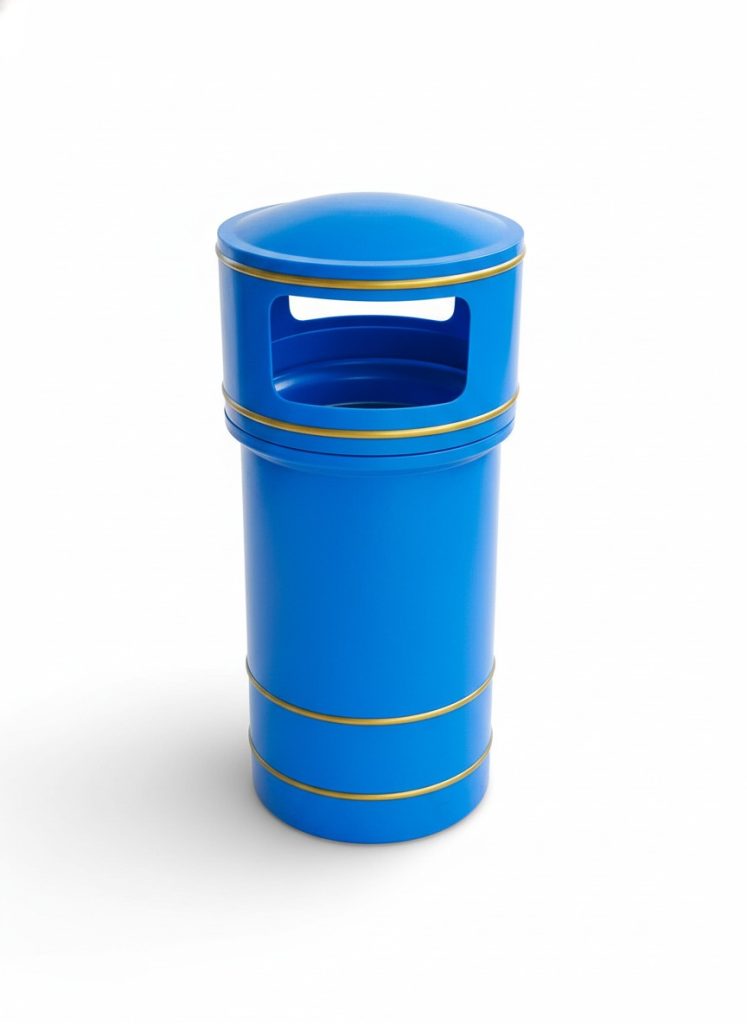
Every product is engineered to outlast Malaysia’s climate, to comply with the standards that matter, and to make the right choice the easy one for the people who use it. That is what we mean by the Nordic standard.
A quick guide to getting your bins right for 2026
- Map your streams. Identify what your site actually produces — recyclables (paper, plastic, glass, metal), food waste, residual general waste, and any clinical or hazardous waste.
- Confirm your colours. Common Malaysian public recycling colours are blue for paper, brown for glass, and orange for plastics and aluminium — but always confirm the scheme used by your local council or concessionaire.
- Size for volume and traffic. Match bin capacity to how much each stream generates and how busy each location is.
- Check truck compatibility. Make sure your bins suit your collector’s vehicles — MGB lifters or manual-tip systems.
- Choose for the climate. Specify UV-stabilised HDPE or treated steel built for tropical conditions, not the cheapest container on the shelf.
- Document it. Keep a record of your waste setup and collection — you will need it for inspections and ESG reporting.
Talk to NORDVOX
Whether you are a facilities manager preparing a single building, a developer specifying infrastructure for a new project, or a council planning a fleet-wide rollout, our team will help you choose the right bins for your collection system, your site and your budget — and supply them across Peninsular and East Malaysia.
- 📞 Office: +603-8926 1301
- 📱 WhatsApp: +6017-385 6801
- 📧 Email: info@nordvox.com
- 🌐 Website: www.nordvox.com
NORDVOX SDN. BHD.
14 Jalan 9/7, Seksyen 9, 43650 Bandar Baru Bangi, Selangor, Malaysia.
Browse MGB Wheel Bins | Recycling Bins & Stations | Four Wheel Bins | Leach Bins | Request a Quote | Download Catalogue
Sources: Ministry of Housing and Local Government (KPKT) · Department of Environment Malaysia · Malaysia Plastics Sustainability Roadmap 2021–2030 · Circular Economy Blueprint for Solid Waste 2025–2035 · Bursa Malaysia sustainability reporting framework · UNDP Malaysia. Figures and timelines are indicative and subject to change; confirm current requirements with your local authority.


[…] businesses working through the compliance side of these changes, our guide to Malaysia’s 2026 Waste Reforms explains the regulatory backdrop driving commercial recycling […]