
If you manage a building in Malaysia, you have almost certainly been approached about sanitary bin rental. The pitch is straightforward: pay a monthly fee per bin, and a service company supplies the unit, changes the liner, and takes the waste away. No capital outlay, no hassle.
For some sites, that is genuinely the right answer. For most, it is not. This article sets out both models honestly, then gives you a simple framework to work out which is cheaper for your building — using your own numbers rather than ours.
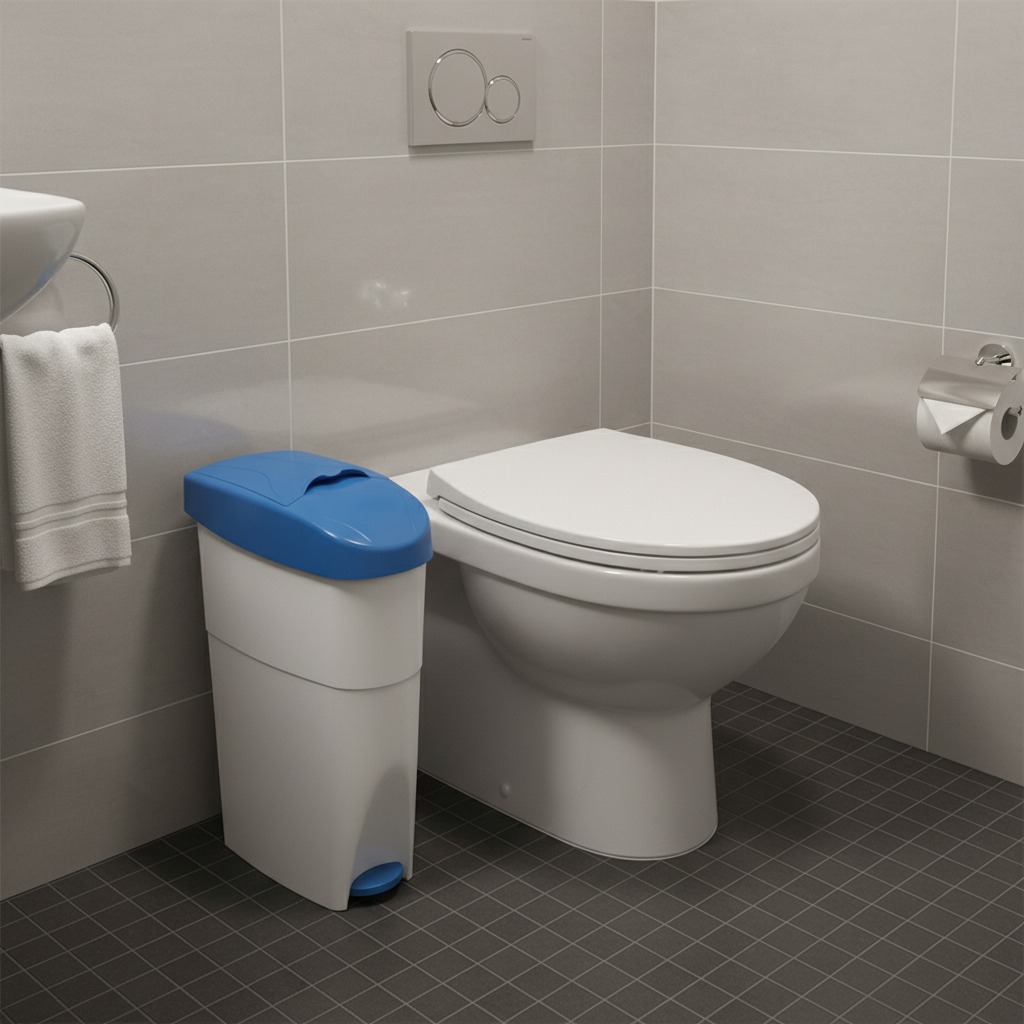
How Sanitary Bin Rental Works
Under a rental or serviced model, the hygiene company retains ownership of the bins. They install units in your female cubicles, then attend on a scheduled cycle — typically fortnightly or monthly — to exchange or empty each bin. You pay a recurring fee per bin, usually billed monthly or quarterly, often under a contract with a fixed minimum term.
The fee bundles four things: the hardware, the consumables, the labour of servicing, and the disposal of the collected waste. Because it is a single line item, it looks simple on a budget sheet. However, that simplicity is also what makes it hard to compare against buying.
What rental genuinely gives you
- No capital outlay — nothing to approve as capex, which matters if your budget is structured around operating expenditure.
- No cleaning labour required — the service provider handles servicing, so you need no in-house cleaning team at all.
- Waste disposal included — the provider removes and disposes of the collected waste under their own licence.
- Replacement covered — damaged units are swapped by the provider rather than reordered by you.
How Buying Outright Works

Under a purchase model, you buy the bins once and they become your asset. Your existing cleaning team services them on their normal round — the same round on which they already empty the general washroom bin, restock tissue, and mop the floor. You buy liners as a consumable, and the sanitary waste leaves the building through your existing waste contract.
The critical point is this: servicing a lined sanitary bin takes seconds. The cleaner lifts out a tied liner, drops in a fresh one, and moves on. It is not a separate visit, a separate trip, or a separate person. It is one more action in a cleaning round that is already happening and already paid for.
What buying genuinely gives you
- No recurring fee — once the bins are paid for, the only ongoing cost is liners.
- No contract — no minimum term, no notice period, no annual price escalation.
- You control the service frequency — daily if the washroom is busy, rather than whatever the contract specifies.
- The asset is yours — the bins stay with the building, including through a change of cleaning contractor.
The Question That Decides It
Strip away the sales material and the decision comes down to one thing: does your building already employ cleaning staff?
If it does not — if the washrooms are unattended or cleaned only occasionally — then rental makes sense. You are buying labour you do not otherwise have, and the fee is fair for what it delivers.
However, most commercial buildings in Malaysia already have a cleaning contract in place. Offices, hotels, shopping malls, hospitals, condominiums, and schools all employ cleaners who are in those washrooms every single day regardless. In that case, rental means paying a second party to perform a task your existing team is already standing in front of. That is the entire cost difference, and it is why purchase wins so decisively for most sites.
Run the Numbers for Your Building
Rather than quoting figures that may not match your quote, here is the calculation to run. It takes about five minutes with a rental quote in front of you.
Step 1 — Count your bins
Count every female cubicle across every floor, then add accessible and staff washrooms. The correct standard is one bin per cubicle, not one per washroom. Call this number B.
Step 2 — Work out the annual rental cost
Take the monthly fee per bin from your rental quote, multiply by 12, then multiply by B. That is your annual rental cost, and it repeats every year for as long as the contract runs.
Step 3 — Work out the purchase cost
Take the unit price of a bin, multiply by B. That is a one-off figure. Then add your annual liner cost: a packet of 100 liners typically covers one bin for around three months in a standard office, or around one month in a high-traffic mall or hospital washroom.
Step 4 — Compare across a realistic horizon
Compare the two over three and five years. Because the purchase cost is almost entirely front-loaded, while the rental cost repeats indefinitely, the crossover point usually arrives well inside the first year — and everything after that is pure saving.
| Cost element | Rental | Purchase |
| Bins | Included in monthly fee | One-off, per unit |
| Liners | Included in monthly fee | Ongoing consumable, low cost |
| Servicing labour | Included in monthly fee | Absorbed into existing cleaning round |
| Waste disposal | Included in monthly fee | Via existing building waste contract |
| Contract term | Fixed minimum, with notice period | None |
| Annual price increase | Common | Not applicable |
| Asset ownership | Provider | Building owner |
| Cost in year 5 | Same as year 1, or higher | Liners only |
Three Costs People Forget
Contract escalation
Rental agreements frequently include an annual increase clause. Therefore, the figure you compare in year one is not the figure you pay in year four. Ask specifically what the escalation rate is before signing, and model it across the full term.
Service frequency versus actual need
A fortnightly service cycle may be adequate for a quiet office. However, it is not adequate for a shopping mall washroom on a weekend. If your rental contract sets the frequency, you may find yourself paying for a service that still leaves bins full at peak times — and asking your own cleaners to intervene anyway.
What happens at the end
When a rental contract ends, the bins leave with the provider. You have nothing to show for the years of payments, and you start from zero on your next decision. A purchased bin, by contrast, is still in the cubicle and still working.
When Rental Really Is the Better Choice
To be fair to the model, there are situations where rental is the right call:
- No cleaning staff on site — unstaffed facilities, small standalone units, or premises with no cleaning contract.
- Very small bin counts — a site with one or two cubicles, where the administrative effort of managing consumables outweighs the saving.
- Strict opex-only budgets — where capital expenditure genuinely cannot be approved, regardless of the total cost.
- Specialist clinical disposal — where the waste stream requires licensed handling beyond your existing contract.
If none of those describe your building, the arithmetic almost always favours buying.
What You Need if You Buy
Purchasing is straightforward, and there are only three things to get right.
- The right bin count — one per female cubicle, sized to your traffic. NORDVOX supplies an 18L standard unit and a larger-capacity model for high-traffic washrooms.
- The right liners — a correctly sized liner is what makes servicing fast and hygienic. NORDVOX liners are 19″ x 29″ and supplied 100 pieces per packet.
- A brief for your cleaners — servicing takes seconds, but it should be written into the cleaning schedule explicitly rather than assumed.
NORDVOX sells sanitary bins outright with no service contract, no minimum term, and no recurring fee. Browse the sanitary bins range, or see the sanitary bin liners. For a quote across your full building, contact NORDVOX.
Frequently Asked Questions
How much does sanitary bin rental cost in Malaysia?
Rental is charged as a monthly fee per bin, and the rate varies by provider, service frequency, and contract length. Because the fee bundles hardware, liners, labour, and disposal into one figure, always ask for it broken down before comparing it against a purchase price.
Is it cheaper to buy or rent sanitary bins?
For any building that already employs cleaning staff, buying is almost always cheaper. The purchase cost is one-off and the only ongoing expense is liners, whereas rental repeats every month indefinitely and often escalates annually.
Who empties a sanitary bin if I buy it outright?
Your existing cleaning team, as part of their normal round. Because the bin is lined, servicing means lifting out a tied bag and dropping in a fresh one — a task that takes seconds and requires no special training.
Where does the waste go if I do not use a service provider?
Sanitary waste from commercial washrooms leaves the building through your existing general waste contract, in a sealed liner. Clinical settings with specific licensed disposal requirements are the exception and should follow their own healthcare waste protocol.
Do I need a contract to buy sanitary bins from NORDVOX?
No. NORDVOX sells bins and liners outright with no service agreement, no minimum term, and no recurring charge. You order what you need, when you need it.
How many sanitary bins does my building need?
One per female cubicle, not one per washroom. Count every cubicle across all floors, then add accessible and staff washrooms.


