
Malaysia’s EPR framework and carbon tax both arrive in 2026. Singapore is targeting a 20% reduction in landfill waste this year. For facility managers, the question is no longer whether to act — it is how fast.
2026 is the year compliance becomes non-negotiable. Across Malaysia and Singapore, a convergence of new legislation, reporting mandates, and financial penalties is reshaping the responsibilities of every facility manager. Extended Producer Responsibility, a carbon tax directly tied to your waste disposal choices, stricter enforcement under the Environmental Quality Act, and Singapore’s active landfill reduction targets are no longer policy proposals on a horizon — they are here. This guide breaks down exactly what you need to know and what you need to have in place today.
MY Malaysia
The Malaysian Regulatory Landscape in 2026
Three major forces are converging on Malaysian businesses simultaneously, and facility managers sit at the operational centre of all three: the overhauled Environmental Quality Act, the arrival of Extended Producer Responsibility, and the new carbon tax — each of which has a direct bearing on how waste is collected, segregated, documented, and reported on-site.
Environmental Quality (Amendment) Act 2024
The Environmental Quality (Amendment) Act 2024 took effect on 7 July 2024 and represents a complete overhaul of environmental enforcement in Malaysia — not a minor update. The most significant change for facility managers is the scale of potential penalties: businesses that improperly dispose of waste, or that engage unlicensed waste contractors, now face fines of up to RM10 million.
Critical liability: the waste generator is responsible
Under Malaysian law, the obligation for proper disposal sits with the waste generator — not the contractor. If your appointed hauler disposes of waste illegally, your facility faces the full RM10 million penalty. Always verify that your contractor holds a valid licence from SWCorp or the Department of Environment, and retain official landfill tickets as your documented proof of proper disposal.
Landfill tickets — official records proving waste reached a licensed facility — are not optional documentation. Without them, audits and licence renewals become high-risk events. Digital waste management systems that automatically organise records by date and waste stream are increasingly becoming an operational baseline rather than a premium feature.
Act 672 & SWCorp: Mandatory Waste Segregation
The Solid Waste and Public Cleansing Management Act 2007 (Act 672) remains the governing statute for mandatory waste segregation in Peninsular Malaysia, enforced by the Solid Waste and Public Cleansing Management Corporation (SWCorp). The obligation is clear: recyclables must be separated from general waste at the source.
The SWCorp colour-coded bin system is the practical implementation framework for this mandate. Every commercial and institutional premise covered by the Act must provide compliant separation infrastructure — the right bins, in the right colours, clearly labelled and accessible to all users of the facility.
| Bin Colour | Waste Stream | Examples |
|---|---|---|
| Blue | Paper & Cardboard | Newspapers, office paper, cardboard boxes |
| Orange | Cans | Soda cans |
| Brown | Plastic | Bottles, containers, packaging (clean & dry) |
| Green | General Waste | Non-recyclables, food-contaminated items |
| Black/Grey | Others | E-Waste/ |
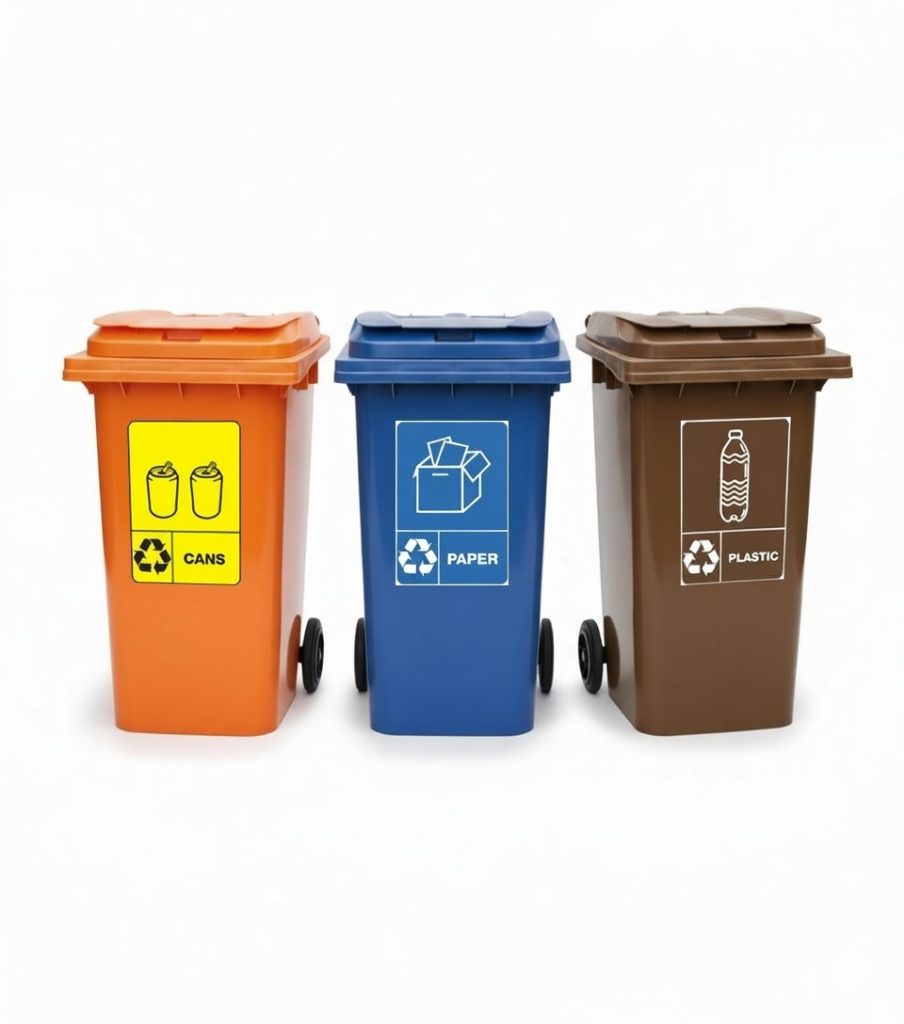
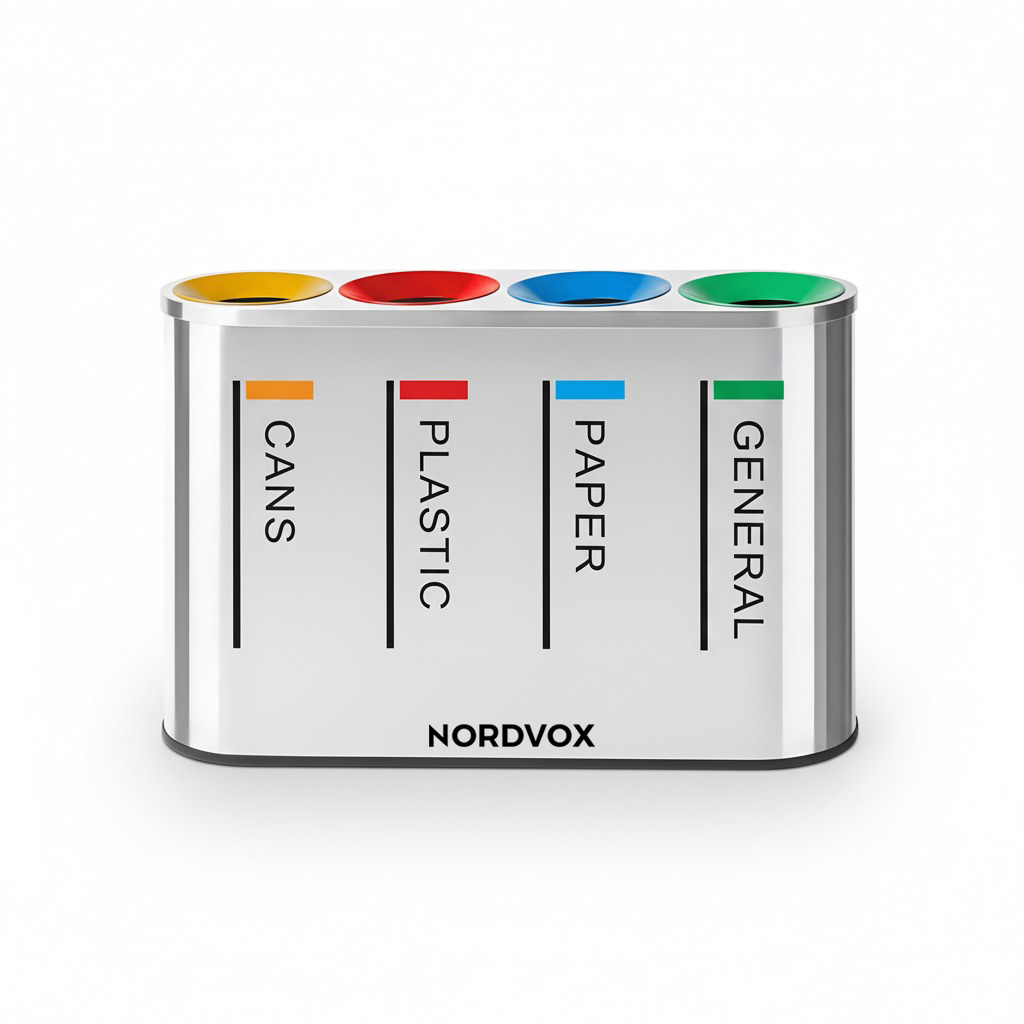
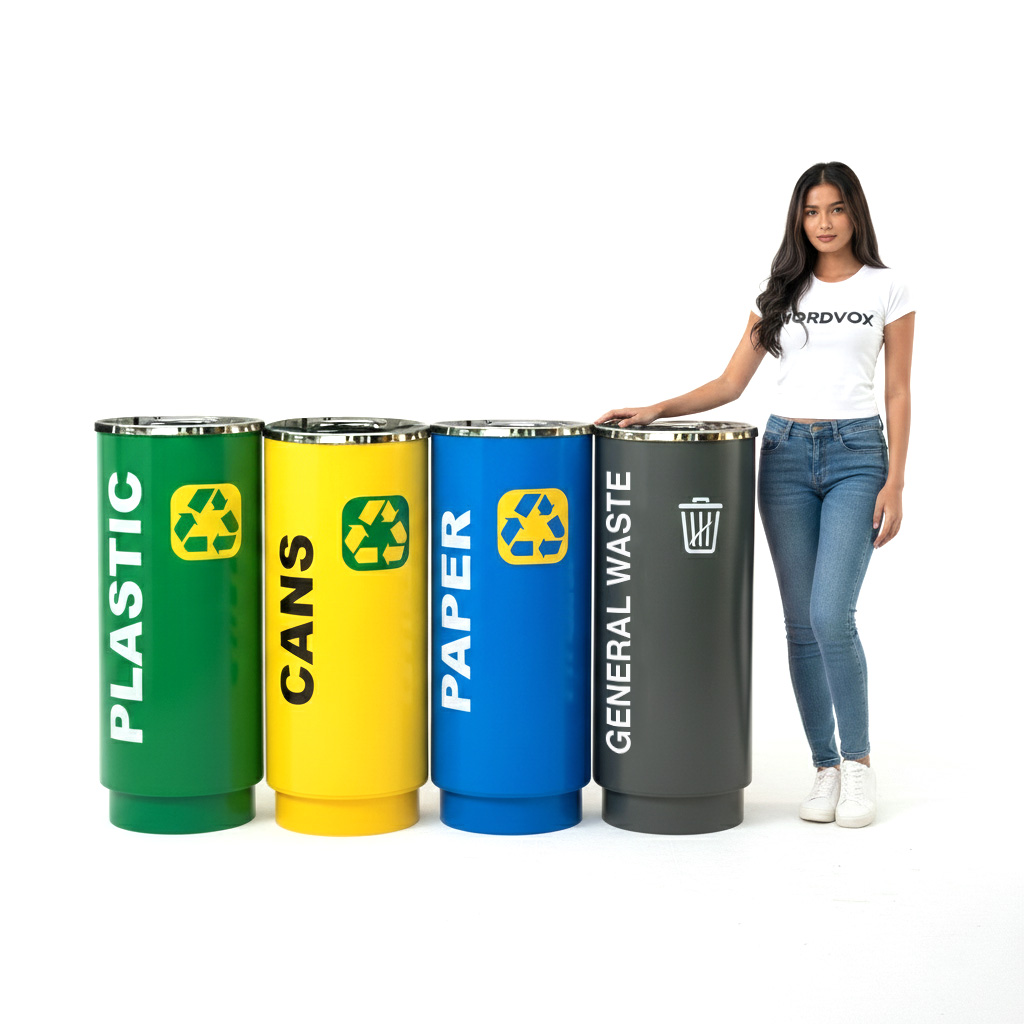
Contamination remains the primary cause of recycling failure in Malaysian facilities. Food residue on plastics and paper, or non-recyclables mixed into coloured bins, can spoil entire batches. Facility managers should schedule regular user education sessions and ensure bin labels are clear, durable, and in the languages spoken by all staff and building users.
Extended Producer Responsibility (EPR) — Launching 2026
Malaysia’s EPR framework is expected to launch in 2026, creating a new layer of compliance obligation for businesses involved in packaging. Under EPR, producers and importers of packaging become financially responsible for the end-of-life collection and recycling of their products. This aligns with the government’s Circular Economy Blueprint (2025–2035), which signals the long-term direction of national waste policy.
“Companies already diverting waste to recycling, composting, or waste-to-energy facilities will pay less than competitors still relying on traditional disposal. The gap is only going to widen.”
For facility managers, EPR has two practical implications. First, if your organisation places packaged goods on the Malaysian market, you may have registration and reporting obligations. Second, the infrastructure you build now — segregation systems, recycling bin capacity, hauler documentation — directly positions your facility to adapt when EPR compliance becomes routine auditing practice.
Carbon Tax & ESG Reporting
Budget 2025 confirmed that Malaysia’s carbon tax begins in 2026, initially targeting the iron, steel, and energy sectors. Expansion to cement, aluminium, fertiliser, and other industries is already under active consideration. The connection to waste management is direct: landfill generates methane, a greenhouse gas with roughly 80 times the warming potential of CO₂ over 20 years. Every tonne your facility sends to landfill increases its carbon liability.
For companies listed on Bursa Malaysia, ESG reporting timelines add urgency. All Main Market listed companies must report waste metrics by 2026, with ACE Market and large non-listed companies joining in 2027. Facility managers who have waste diversion data ready and auditable are providing their organisations with a direct competitive and compliance advantage.
July 2024
EQ (Amendment) Act 2024 Takes Effect
RM10M maximum fines for improper disposal. Landfill ticket documentation becomes essential.
2026 — Now
EPR Framework & Carbon Tax Launch
Producers responsible for packaging end-of-life. Carbon tax begins. ESG reporting required for Main Market companies.
2027
ACE Market & Large Non-Listed Companies
ESG waste reporting mandate expands. Bursa Malaysia framework requires documented waste diversion data.
2025–2035
Circular Economy Blueprint
Long-term policy direction: EPR expansion, waste-to-energy investment, and transition away from linear waste models.
SG SINGAPORE
Singapore: The 2026 Landfill Reduction Target
Singapore’s regulatory framework for waste is anchored in its Zero Waste Masterplan and operationalised through the Resource Sustainability Act (RSA) 2019. The headline goal for 2026 is unambiguous: reduce the amount of waste sent to Semakau Landfill per capita per day by 20%, with a further 30% reduction target set for 2030. Semakau is Singapore’s only landfill, and its lifespan is finite. The urgency is not rhetorical.
Beverage Container Return Scheme (BCRS) — Live in 2026
Singapore’s Beverage Container Return Scheme, branded as Return Right, is operational from 2026 and managed by BCRS Ltd — a not-for-profit consortium operator supported by the National Environment Agency (NEA). The scheme runs through to 2033 and covers all eligible aluminium cans and PET plastic bottles bearing the Deposit Mark.
The mechanics for facility managers are straightforward: consumers return empty, uncontaminated containers to Reverse Vending Machines (RVMs), receiving 10 cents per container deposited — redeemable via SimplyGo EZ-Link cards or DBS PayLah! QR codes. For commercial building operators, this means evaluating whether your premises should host an RVM return point, providing clearly marked collection areas, and communicating the scheme to all building tenants and staff.
The containers collected through Return Right are sent to a dedicated facility managed by Cora Environment, ensuring a clean, high-quality recycling stream entirely separate from general commingled recycling — a model that directly supports Singapore’s circular economy objectives.
E-Waste EPR & Producer Responsibility Scheme
Singapore’s e-waste EPR framework, implemented under the RSA since July 2021, continues to evolve in 2026. Producers of regulated electrical and electronic equipment must fund collection and proper treatment through the Producer Responsibility Scheme (PRS). The current PRS operator, ALBA E-waste Smart Recycling Pte Ltd, covers the period to mid-2026, after which the framework’s next phase will be active.
For facility managers, this means ensuring that used ICT equipment, printers, batteries, and other regulated consumer electronics are directed to licensed e-waste collection points rather than placed in general waste or recyclables bins. NEA provides a network of e-waste bins at many commercial premises, shopping malls, and electronics retailers.
Mandatory Food Waste Reporting
Large food waste generators in Singapore — including hotels, shopping malls, and industrial canteens — are subject to mandatory food waste segregation and reporting under the RSA. Facility managers operating qualifying premises must ensure that food waste is segregated at the source and processed through approved treatment systems, such as on-site digesters or licensed food waste contractors.
The NEA’s 3R Fund provides co-funding for organisations implementing waste minimisation and recycling projects, including the installation of on-site food waste treatment infrastructure. This represents a practical funding pathway for facility managers looking to reduce disposal volumes and associated costs.
NEA Mandatory Waste Reporting for Commercial Premises
Under the NEA’s Mandatory Waste Reporting (MWR) framework, large commercial premises — including industrial facilities, hotels, malls, convention centres, and logistics operations — must track and submit waste generation, recycling, and disposal data. This data overlaps with ESG and stakeholder reporting requirements, meaning a single, well-structured waste data system can simultaneously satisfy regulatory, investor, and tenant reporting needs.
Businesses that mix recyclable and general waste figures, change reporting formats from year to year, or lack consistent documentation risk both regulatory scrutiny and audit complications with customers and landlords who increasingly request sustainability performance data.
Six Regulations Every Facility Manager Must Know
🇲🇾 Malaysia
Environmental Quality (Amendment) Act 2024
RM10M maximum fines. Waste generator liability. Mandatory landfill ticket documentation from July 2024.
🇲🇾 Malaysia
Act 672 — Mandatory Waste Segregation
SWCorp-enforced colour-coded bin system for all premises in participating states. Recyclables must be separated at source.
🇲🇾 Malaysia
EPR Framework — 2026
Producers of packaging responsible for end-of-life recovery. Recovery quotas, packaging waste tracking, and fees for non-compliance.
🇲🇾 Malaysia
Carbon Tax & Bursa ESG Reporting
Carbon tax starts 2026. Main Market companies must report waste metrics. Landfill emissions counted in Scope 3 calculations.
🇸🇬 Singapore
Return Right — Beverage Container Scheme
Live from 2026. RVMs accept eligible cans and bottles. Facility managers should consider hosting return points and communicating the scheme to occupants.
🇸🇬 Singapore
Resource Sustainability Act — EPR & MWR
E-waste EPR, food waste segregation mandates, and mandatory waste reporting for large commercial premises under the NEA framework.
Your 2026 Compliance Checklist
Use this as a working audit framework for your facility. Each item addresses a specific regulatory or operational risk identified above.
- Confirm your waste hauler holds a current, valid licence from SWCorp or DOE Malaysia / NEA Singapore and document this annually.
- Retain official landfill tickets or electronic waste disposal records for all collections — these are your proof of compliance during audits.
- Audit your bin infrastructure: ensure all SWCorp colour-coded recycling streams are present, labelled, and accessible in Malaysia.
- In Singapore commercial premises: map e-waste collection points and communicate proper e-waste disposal to all tenants and staff.
- For Singapore premises eligible for food waste reporting: verify that segregation systems are operational and data is being captured.
- Evaluate whether your Singapore building should host a Return Right RVM or promote nearby return points to building users.
- Establish a centralised waste data record system that can serve regulatory, ESG, and stakeholder reporting from a single dataset.
- If your organisation places packaged goods on the Malaysian market, engage legal counsel to assess your EPR registration obligations.
- Calculate your waste-related Scope 3 emissions — your tonnes sent to landfill directly affect your carbon tax and ESG positioning.
- Upgrade bin capacity where needed: high-volume sites should consider MGB1100 four-wheel bins to reduce collection frequency and overflow risk.
Choosing the Right Bin Infrastructure
Regulatory compliance is only as effective as the physical infrastructure that supports it. Facility managers who underestimate bin capacity, positioning, or durability often find that even well-intentioned segregation programmes collapse under the pressure of a busy site. Here are the core considerations.
Capacity and Volume
Oversized general waste bins invite contamination — when recycling bins fill up first, users default to whatever is nearest. A well-sized recycling bin reduces contamination by making the correct choice the convenient choice. For high-volume sites such as manufacturing facilities, logistics hubs, and commercial campuses, the MGB1100 Four-Wheel Bin provides 1,100 litres of capacity on a mobile four-wheel chassis — reducing collection frequency and keeping high-traffic areas clear.
Mobility and Positioning
Recycling behaviour correlates directly with proximity. Bins placed more than a short distance from the point of waste generation see dramatically lower use. Two-wheel bins such as the MGB240 are well suited to corridors, loading bays, and semi-outdoor areas where a four-wheel unit would be impractical — and they are fully compatible with mechanical bin-lifters used by most licensed waste haulers.
Segregation Sets for Multi-Stream Compliance
For premises that must maintain multiple SWCorp-coded streams, a matched MGB240 Two-Wheel Bin Recycling Set provides a uniform, colour-coded solution in a single purchase — ensuring visual consistency, which supports user compliance. Consistent bin aesthetics reduce user confusion and are especially important in mixed-occupancy buildings where not all users are familiar with the segregation system.
Malaysia’s Extended Producer Responsibility (EPR) framework is expected to launch in 2026. It places financial responsibility on producers and importers of packaging for end-of-life collection and recycling. Companies with existing recycling infrastructure will adapt most easily, while those starting from zero will scramble to meet recovery quotas.
Yes. Malaysia’s carbon tax starts in 2026 for heavy industry, with expansion planned. Landfill emissions fall under Scope 3 calculations for companies subject to ESG reporting on Bursa Malaysia. Every tonne diverted from landfill to recycling reduces your organisation’s carbon footprint and associated tax and reporting liability.
Under Malaysian law, the waste generator bears full responsibility — not the contractor. Using an unlicensed contractor exposes your business to fines of up to RM10 million under the Environmental Quality (Amendment) Act 2024. Always verify your contractor’s licence and retain landfill tickets as documented proof of proper disposal.
Branded as Return Right, Singapore’s Beverage Container Return Scheme launched in 2026 and runs to 2033. Consumers return eligible empty aluminium cans and PET plastic bottles to Reverse Vending Machines (RVMs) and receive 10 cents per container. Facility managers in commercial buildings should consider hosting RVM points and promoting the scheme to all building occupants.
Under SWCorp’s colour-coded system, most commercial premises in the states covered by Act 672 require separate bins for paper (blue), plastic (yellow), glass (brown), and metal (green), plus general waste. NORDVOX MGB240 Two-Wheel Bins are widely used for standard commercial applications, while MGB1100 Four-Wheel Bins serve high-volume industrial and logistics sites.
The Solid Waste and Public Cleansing Management Act 2007 (Act 672) mandates waste segregation across Malaysia. It is enforced by SWCorp (Solid Waste and Public Cleansing Management Corporation) in the states that have adopted the Act, primarily in Peninsular Malaysia. Businesses that fail to maintain compliant segregation systems are subject to enforcement action.
Related Products from NORDVOX
All Nordvox bins are engineered to Malaysian SWCorp standards and are suitable for commercial, industrial, and institutional applications across Malaysia and Singapore. Explore our most-used products for compliance-driven waste infrastructure:
- MGB240 Two-Wheel Bin Recycling Set— colour-matched SWCorp set for multi-stream segregation compliance.
- MGB240 Two-Wheel Bin— the standard 240-litre mobile bin for offices, corridors, and loading bays.
- MGB1100 Four-Wheel Bin— 1,100-litre high-capacity unit for industrial and high-volume commercial sites
Published by NORDVOX SDN. BHD. · Waste Management Products · Malaysia & Singapore
This article is intended as a general guidance resource for facility managers and does not constitute legal or regulatory advice. Regulations change frequently — verify current requirements directly with the relevant authorities: Department of Environment Malaysia (DOE), SWCorp, and the National Environment Agency (NEA) Singapore. Last reviewed: April 2026.


