
I. Introduction: Malaysia’s Recycling Ambition and Urgency
The environmental narrative in Malaysia is changing. Our national recycling rate has moved forward, yet the ambitious 40% target for 2025 looms large. With an estimated 16,720 tonnes of food wasted daily and the ongoing surge in single-use plastic, the national solid waste management system is under immense pressure.
The solution starts not at the landfill, but in your premise. Effective waste segregation, powered by the right Recycling Bins in Malaysia (or Tong Kitar Semula), is the single most critical action for every Malaysian business and household.
This is your definitive guide to the mandatory regulations, official color codes, and the specialized NORDVOX solutions engineered to make Malaysia’s recycling goals a reality.
I. The Mandatory System: SWCorp Regulations & Waste Segregation
To ensure a unified national approach, the Malaysian government mandates waste segregation under the Solid Waste and Public Cleansing Management Act 2007 (Act 672). The governing body is the Solid Waste and Public Cleansing Management Corporation (SWCorp), which oversees compliance in states that have adopted the Act.
What is Residual Waste in the Malaysian Context?
Before you can recycle, you must understand what not to put in the recycling bin. Residual Waste is defined as non-hazardous material that cannot be reused or recycled and is destined for the landfill.
Examples of Residual Waste:
- Diapers, sanitary pads, tissues.
- Polystyrene/Styrofoam (often used for food packaging).
- Food-contaminated plastics and paper (e.g., used pizza boxes, oily takeout containers).
Separating this waste stream is crucial to prevent contamination, which can spoil an entire batch of otherwise recyclable materials.
II. Decoding the Colors: Malaysia’s Official Recycling Bin Color Codes
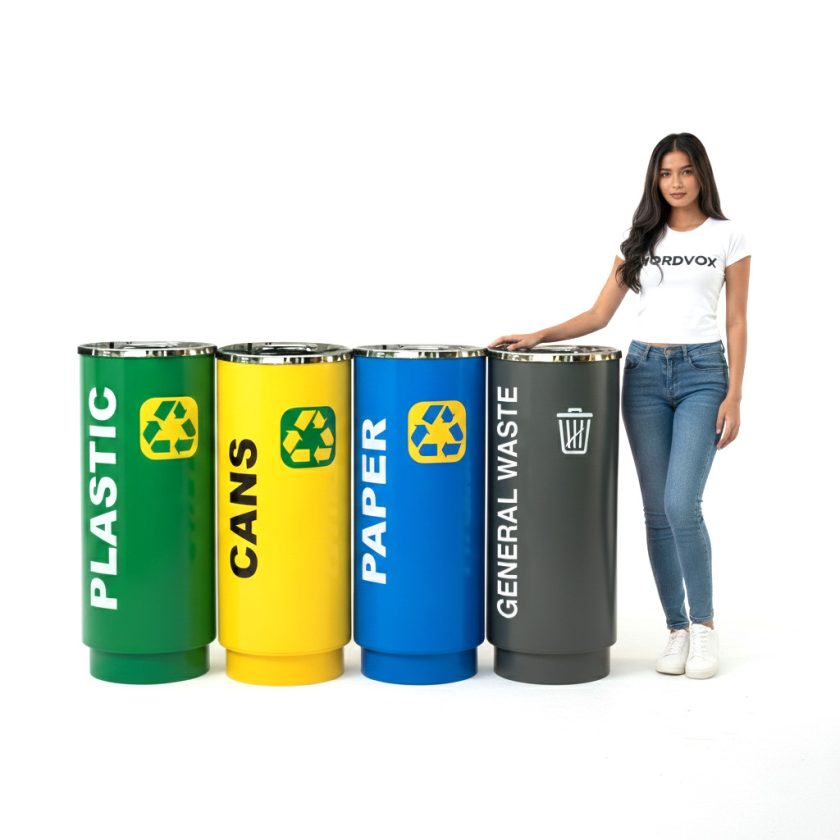
The SWCorp-backed system provides clear guidelines for sorting waste at the source. Understanding these Recycling Bin Colour Codes is the foundation of effective segregation. Below were the original guidelines set by KPKT in the 90s
| Color Code | Primary Material | Specific Examples |
| BLUE | Paper | Newspapers, magazines, office paper, cardboard boxes (flattened). |
| BROWN | Glass | Clear, green, and brown glass bottles and jars (must be rinsed). |
| ORANGE | Plastics & Metals | All types of plastic containers (PET, HDPE, LDPE), aluminum cans, steel tins. |

NORDVOX Differentiation: Optimizing Separation at Source
While the official guideline often groups plastics and metals, industry experts like NORDVOX advocate for further separation to maximise the value and efficiency of the collected materials.
The Nordvox Advantage:
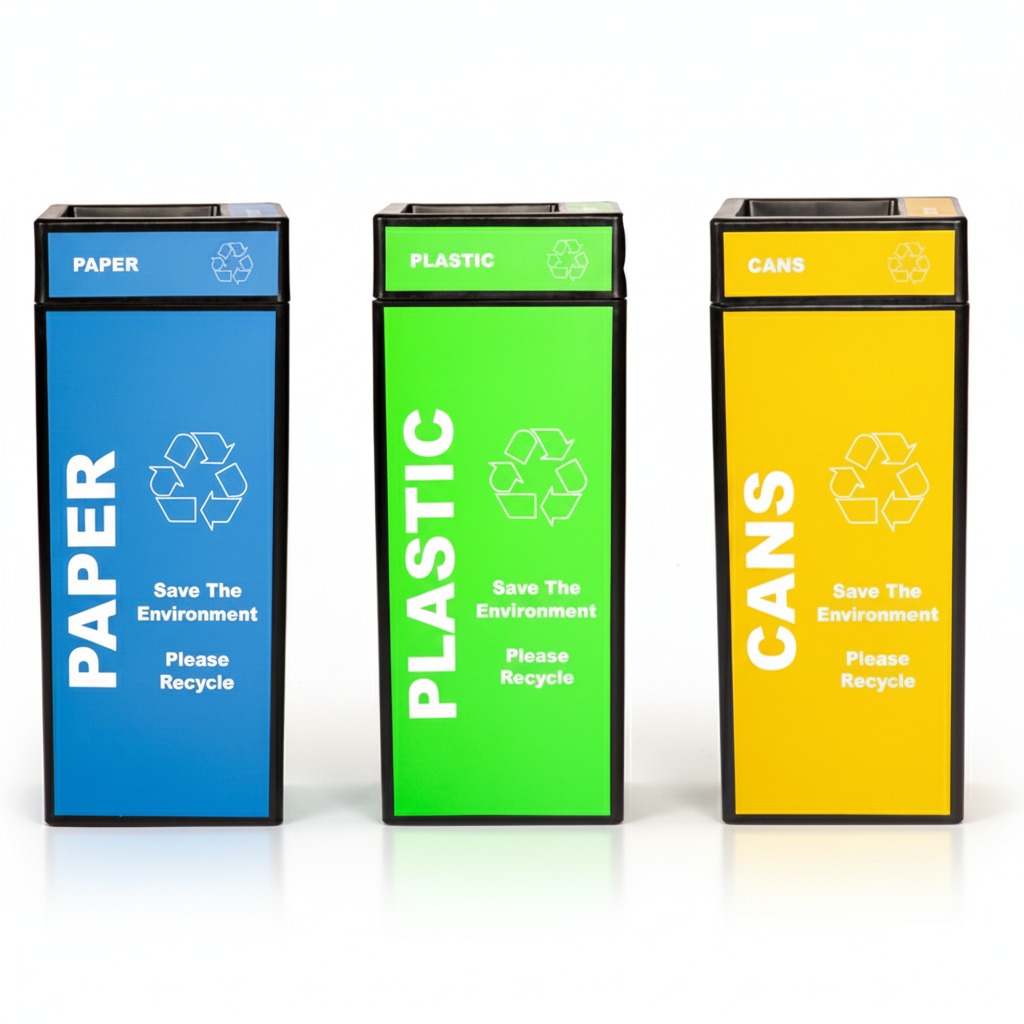
- Dedicated Plastic Bins: Plastic accounts for a high percentage of residential and commercial waste. A dedicated plastic bin prevents cross-contamination with sharp metal items and streamlines the collection process.
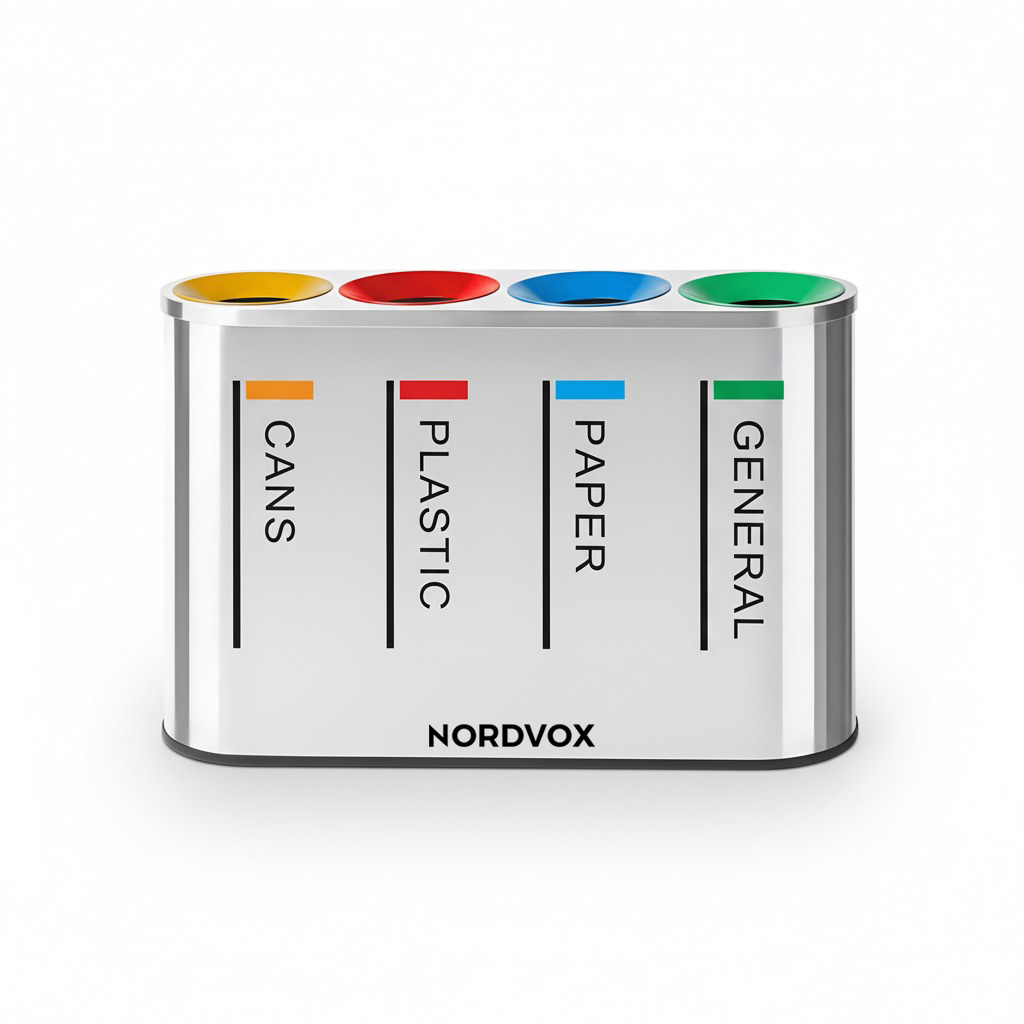
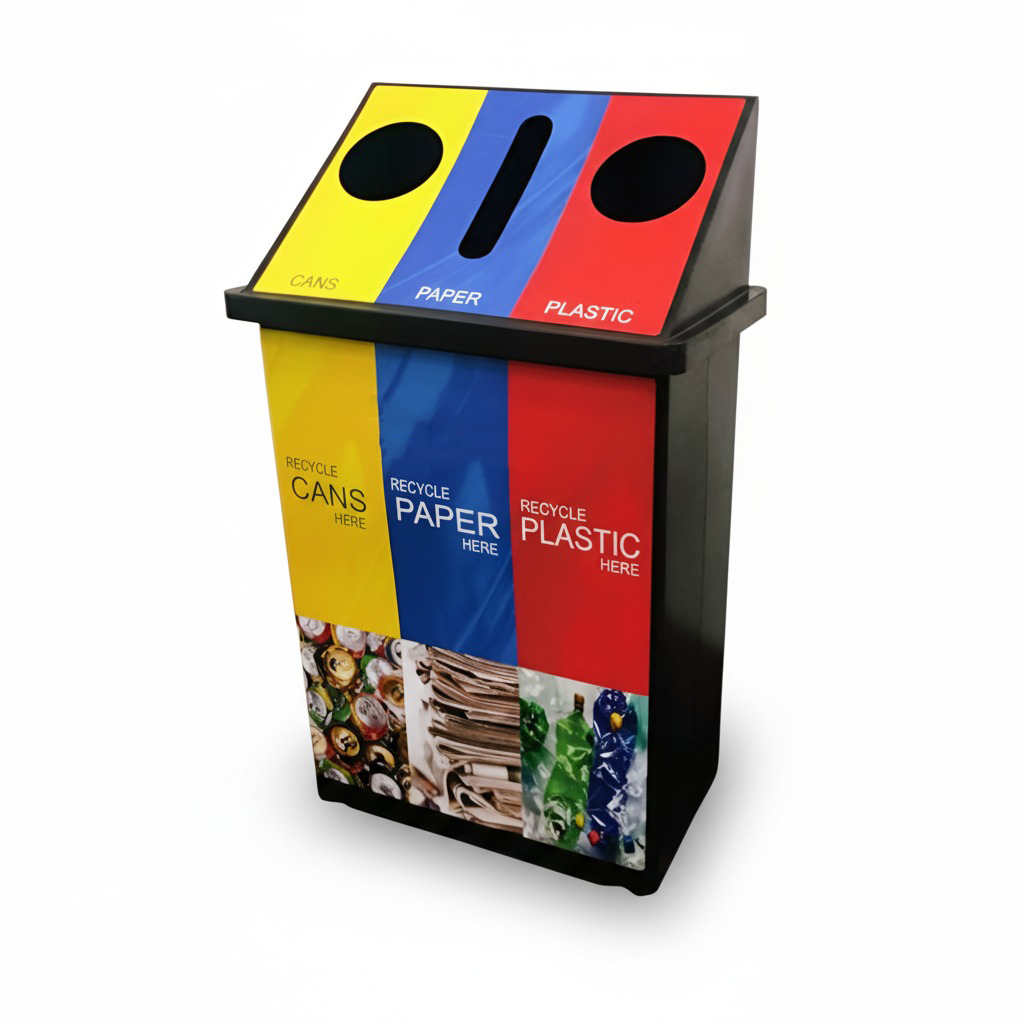
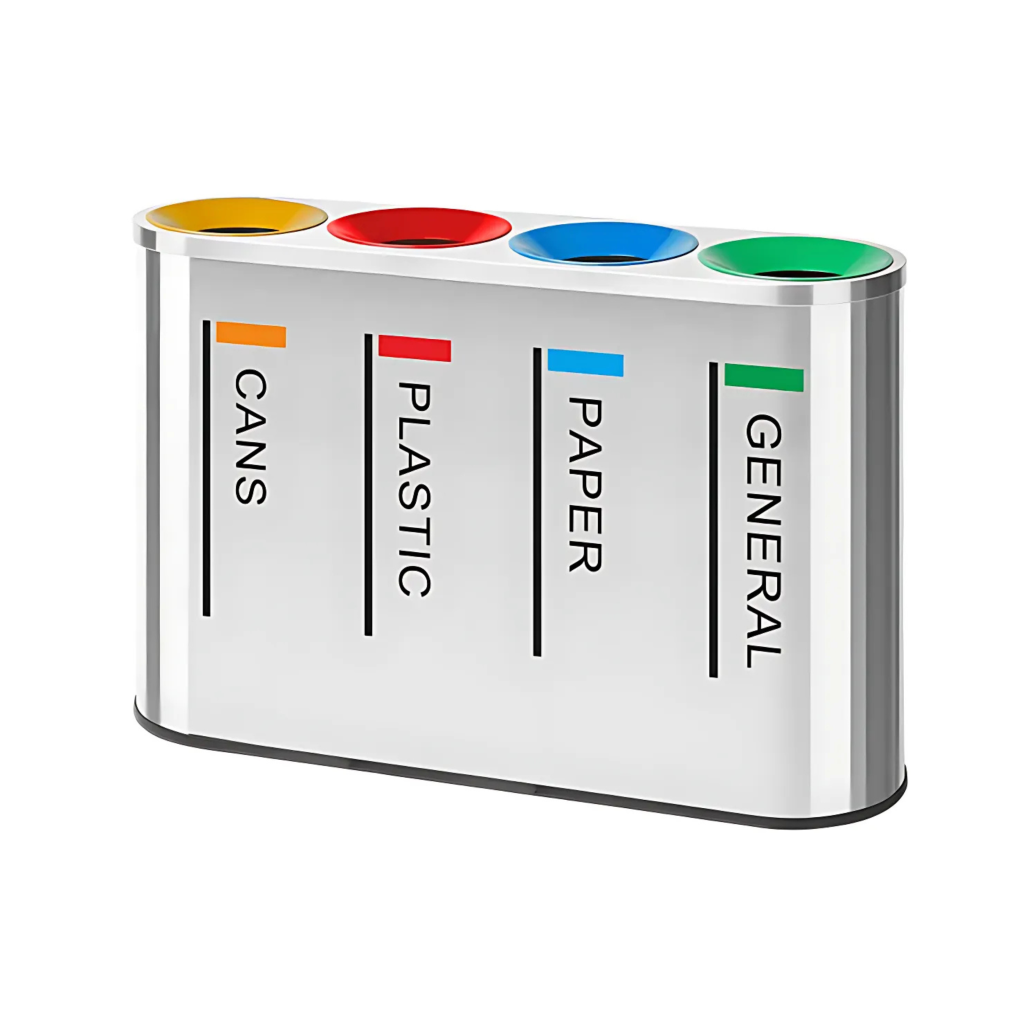
- Customization Systems: For commercial and industrial clients, Nordvox provides customizable multi-compartment bins (e.g., our RSS1200-Quadro 4 in 1 Stainless Steel Recycling Bin) allowing for separation of up to four streams, including dedicated bins for different types of high-value plastic.
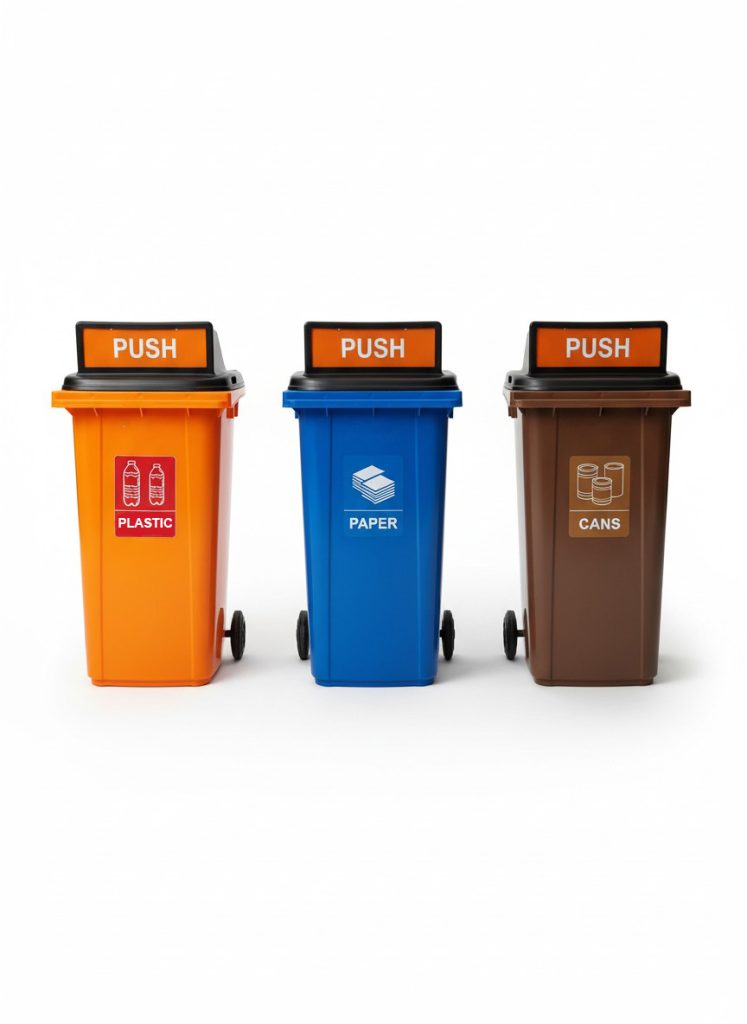
| Color Code | Primary Material | Specific Examples |
| BLUE | Paper | Newspapers, magazines, office paper, cardboard boxes (flattened). |
| BROWN | PLASTIC | All types of plastic containers (PET, HDPE, LDPE). |
| ORANGE | CANS | Aluminium cans, steel tins. |

III. Nordvox Product Deep Dive: Types of Recycling Bins for Every Need
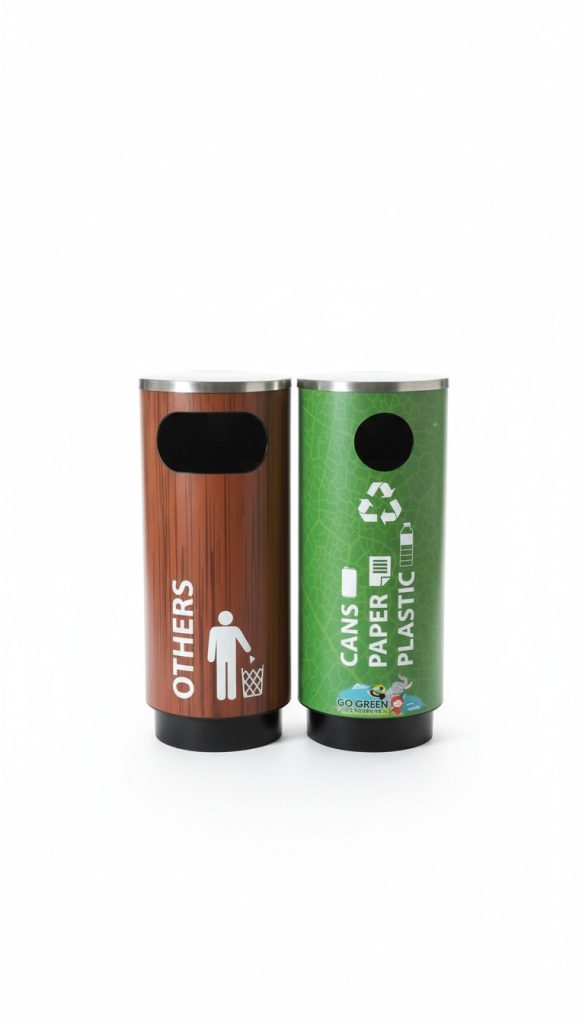
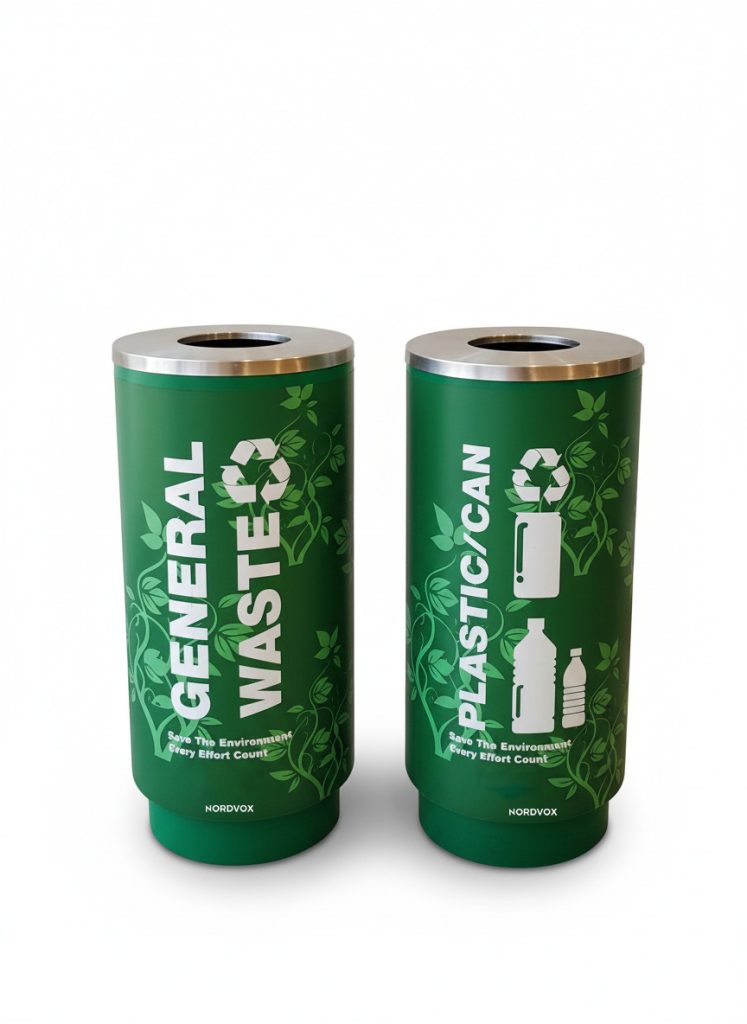
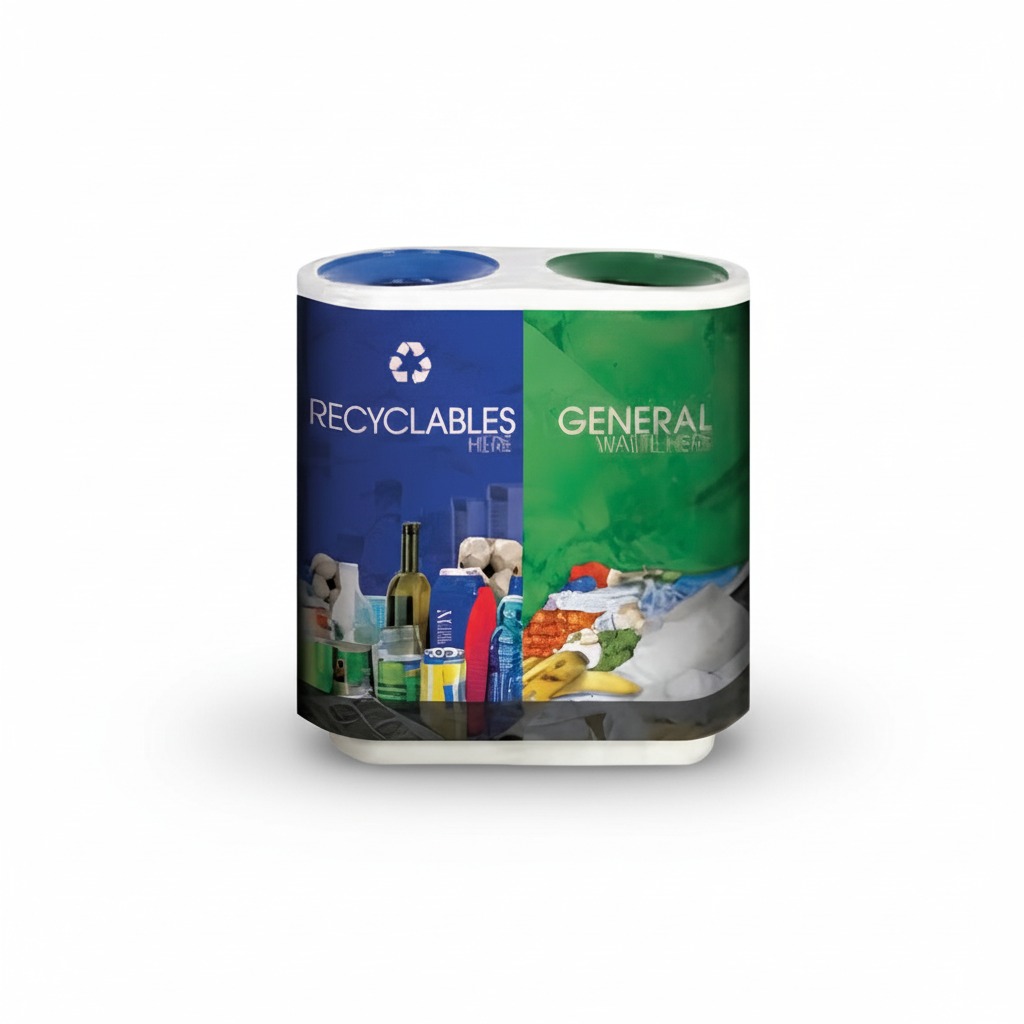
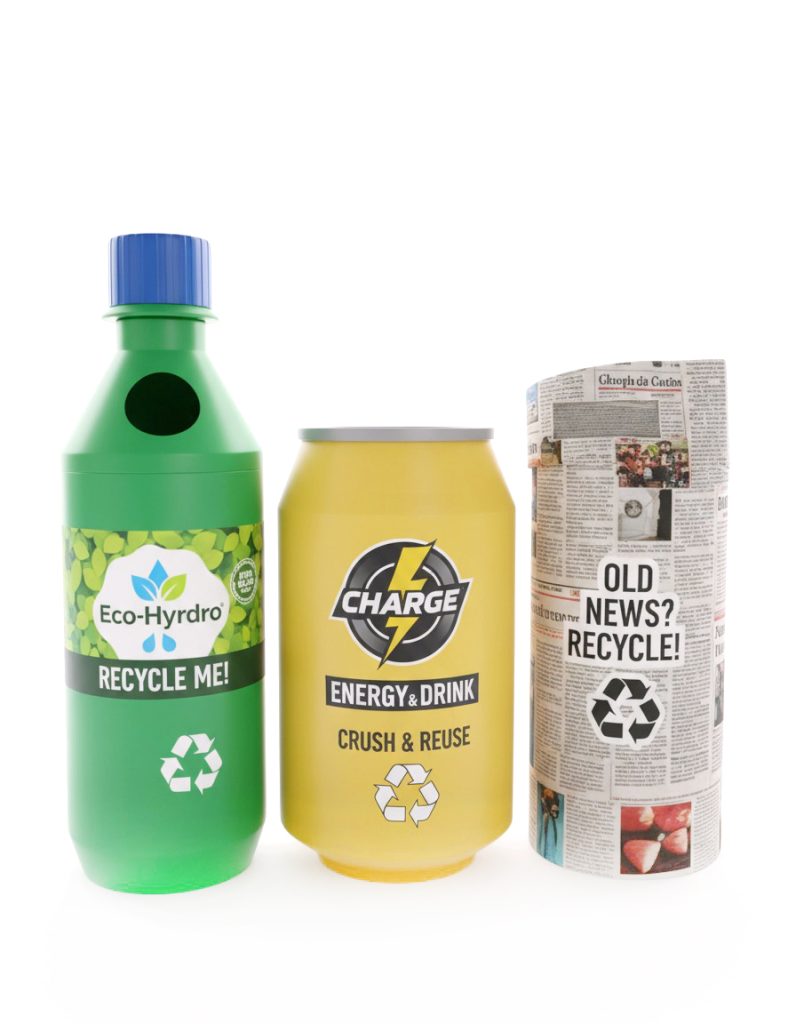
Selecting the right container is essential. Nordvox offers a specialized range of Tong Kitar Semula designed for durability, capacity, and ease of use in diverse Malaysian environments.
| Target Environment | NORDVOX Recycling Bin Examples | Key Features & Application |
| Industrial / Commercial / Public | MGB Wheel Bin Recycling Sets (MGB240, MGB660R) | High-capacity (240L, 660L), durable Polyethylene (PE) construction, wheels for mobility. Ideal for high-volume collection points and external municipal pickup. |
| Office / Corporate / Malls | RSS1200-Trio/Quadro Stainless Steel Bin | Sleek, modern stainless steel design for aesthetics. Multi-compartment options (3 or 4) for paper, plastics, and general waste in corporate settings (e.g., our installation in Low Yat Plaza). |
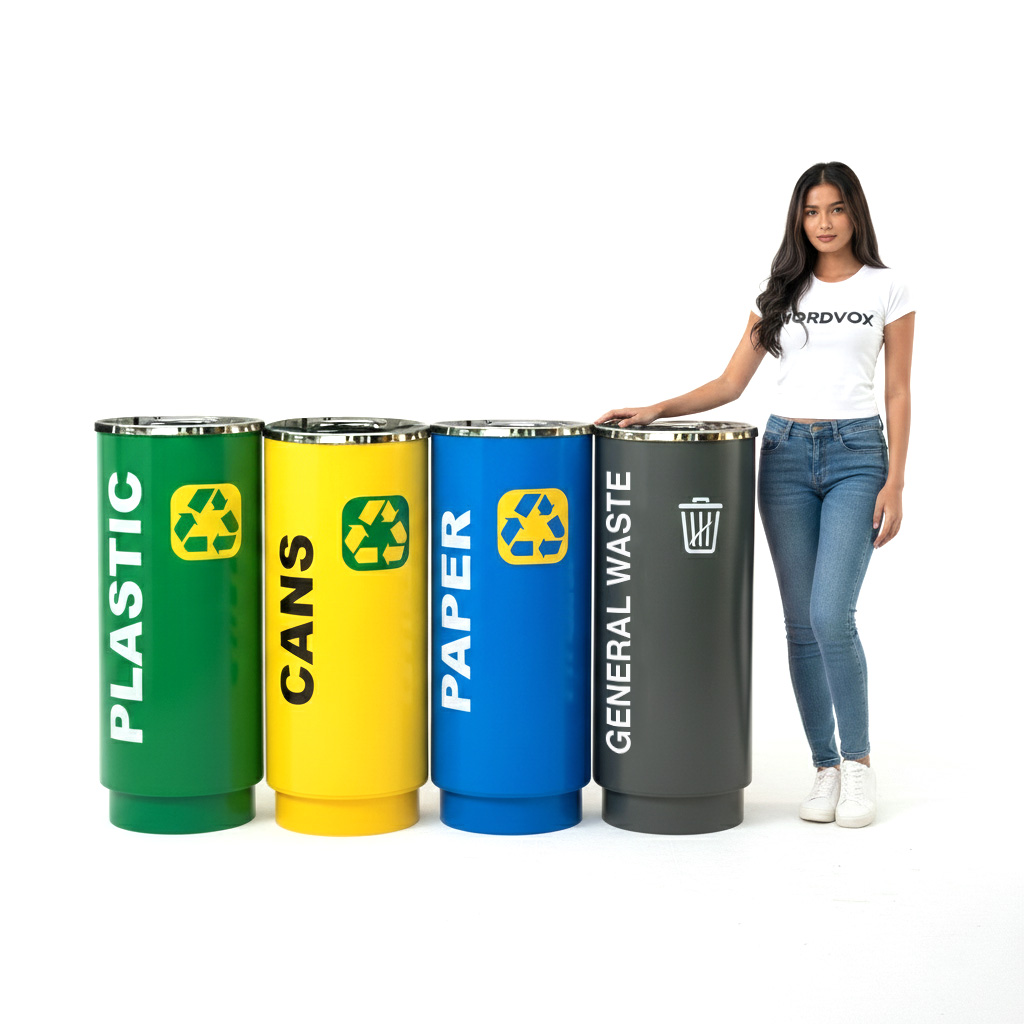
| Residential / High-Traffic Areas | PLB150-R Recycling Bin Set or PTF75-R Recycling Bins | Mid-capacity, customizable colors and labels to suit specific residential needs. Durable HDPE for indoor or sheltered outdoor use. |
| Multi-Stream Indoor | RSB4090 Recycle Bin Set | Modular, stackable, or side-by-side sets designed to clearly define different waste streams in schools or small offices. |
Types of Recycling Bins
- Wheel Bin Recycling Sets

2. Stainless Steel Recycling Bin
3. Outdoor or high traffic areas.
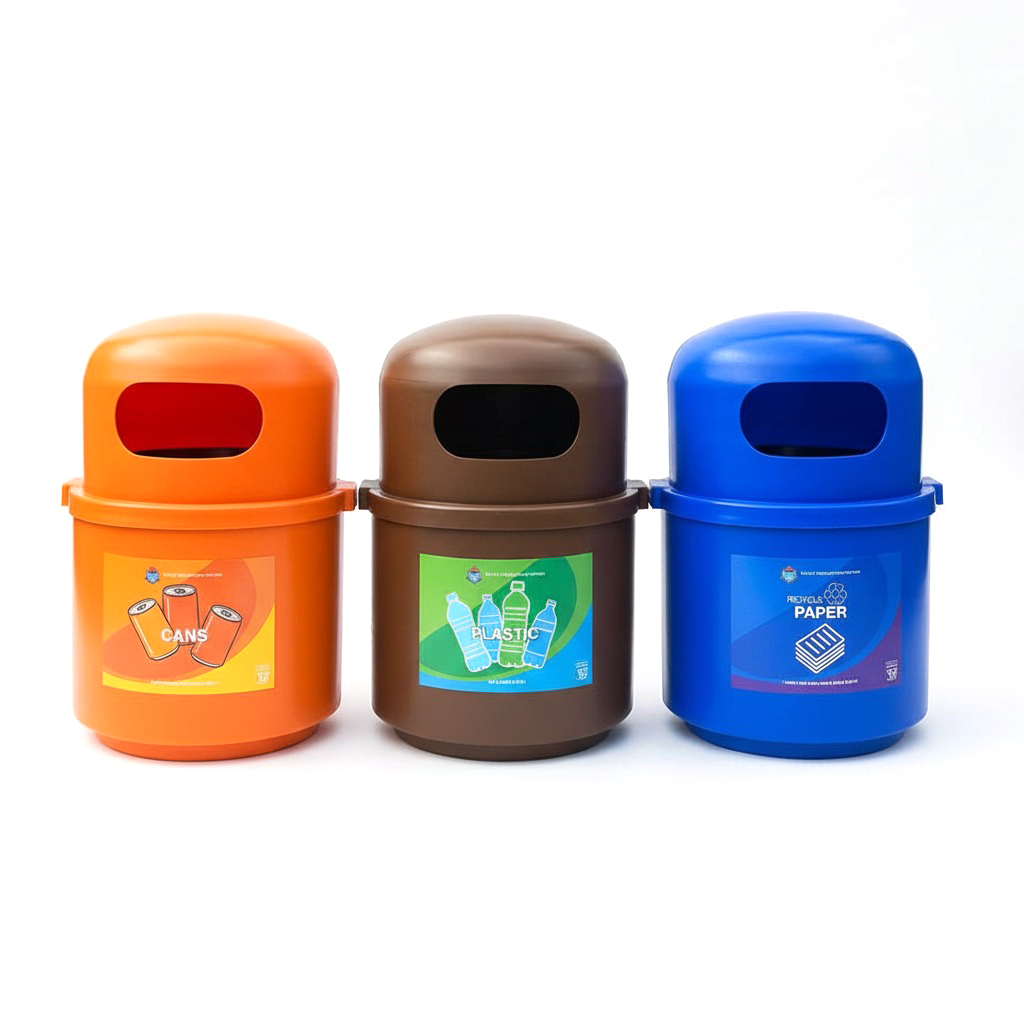
4. Multi stream Indoor Bins
IV. Tackling Malaysia’s Single Biggest Waste Challenge: Food Waste
Food waste represents Malaysia’s most significant waste challenge.
- The Statistic: Food waste constitutes a staggering 44% of Malaysia’s total daily waste (approximately 16,720 tonnes).
- The Danger: When organic waste decomposes in landfills, it releases methane gas, a greenhouse gas estimated to be 25 times more potent than carbon dioxide (CO2). This is a major contributor to climate change.
The Solution: Dedicated Organic Waste Bins
To stop methane emissions, food waste must be separated from general rubbish and diverted to composting or anaerobic digestion facilities.
NORDVOX Food Waste Solution: We offer dedicated PGB Bin Series for Food Waste and specialized MGB units for organic collection. These bins are designed with robust, tight-fitting lids and durable, easy-to-clean materials, making source separation feasible for restaurants, markets, and large households.
IV. Tackling Malaysia’s Single Biggest Waste Challenge: Food Waste
Food waste represents Malaysia’s most significant waste challenge.
- The Statistic: Food waste constitutes a staggering 44% of Malaysia’s total daily waste (approximately 16,720 tonnes).
- The Danger: When organic waste decomposes in landfills, it releases methane gas, a greenhouse gas estimated to be 25 times more potent than carbon dioxide (CO2). This is a major contributor to climate change.
The Solution: Dedicated Organic Waste Bins
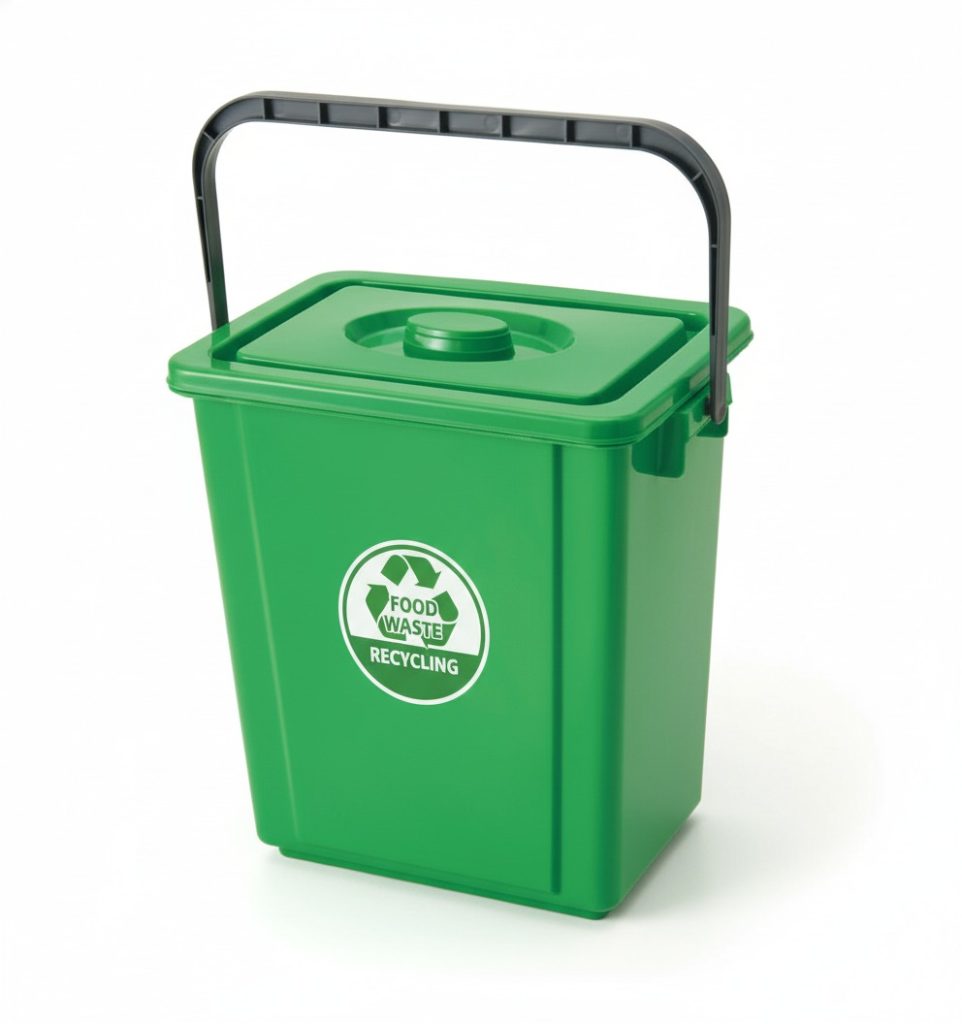
To stop methane emissions, food waste must be separated from general rubbish and diverted to composting or anaerobic digestion facilities.
Nordvox Food Waste Solution: We offer dedicated PGB Bin Series for Food Waste and specialized MGB units for organic collection. These bins are designed with robust, tight-fitting lids and durable, easy-to-clean materials, making source separation feasible for restaurants, markets, and large households.
V. Driving Sustainability: The Circular Economy and WTE
Malaysia is moving beyond the traditional ‘linear’ economy (take, make, dispose). The Circular Economy Blueprint for Solid Waste (2025-2035) aims to achieve sustainability through:
- Extended Producer Responsibility (EPR): Making producers responsible for the end-of-life management of their products.
- Waste-to-Energy (WTE) Plants: Planning for six WTE facilities by 2025 to convert non-recyclable residual waste into energy, significantly reducing reliance on landfills.
By using high-quality Recycling Bins and achieving maximum separation at the source, you actively feed the circular economy, ensuring valuable materials re-enter the production loop and only truly residual waste is left for WTE processing.
VI. Frequently Asked Questions (FAQs) on Malaysian Recycling
Q: What must I rinse before recycling in Malaysia?
A: Yes. Always rinse plastics (bottles, containers), glass, and metal cans. Food residue is a major source of contamination that can ruin entire batches of recyclable material.
Q: Can I recycle dirty food packaging like pizza boxes?
A: No. If paper or cardboard is stained with grease or food, it should be treated as Residual Waste and placed in the general trash, as it cannot be processed.
Q: What is the recommended size for a home recycling bin set?
A: A popular choice for households is a simple 3-in-1 or 4-in-1 modular system (like the Nordvox R2630-Trio or R2640-Quattro), which keeps the main streams (Paper, Plastic, Glass/Metal) separate but organized in a compact footprint.
Q: Where can I purchase durable, customizable Recycling Bins in Malaysia?
A: Nordvox is a leading Malaysian supplier, specializing in durable and customizable waste management solutions, including our extensive line of MGB, RSS, and RSB Recycling Bins suitable for municipal, commercial, and corporate needs.
Ready to achieve your sustainability goals?
Take the next step in waste efficiency. Contact NORDVOX today for a consultation on setting up a customized, compliant, and highly effective Tong Kitar Semula system for your organization.


